




There’s a lot of gear you can bring into the woods, but when it comes down to making a clean, ethical shot on a whitetail, optics are at the top of the list. You can have the best rifle, the best ammo, and the perfect stand location—but if you can’t see clearly or judge distance correctly, none of it matters.
The truth is, most missed opportunities in the deer woods don’t come from bad luck—they come from poor visibility or misjudging distance. That buck that “just appeared out of nowhere”? He didn’t. You just didn’t pick him up early enough. That shot that felt perfect but hit low or high? Odds are the distance wasn’t what you thought it was.
Good optics don’t just help you shoot better—they help you hunt better.
They help you pick apart cover, spot subtle movement, and identify deer before they identify you. They give you confidence in low-light conditions when most mature bucks are actually on their feet. And when it’s time to take the shot, they remove the guesswork that causes hesitation or mistakes.
A complete deer hunting optics setup isn’t just about a rifle scope. It’s about building a system that works together in real-world conditions. One that helps you:
- Identify deer quickly in low light
- Accurately judge distance in changing terrain
- Stay effective whether you’re hunting timber, fields, or edge cover
For most hunters, that system comes down to three key tools: a quality hunting rifle scope, a dependable rangefinder, and—depending on your situation—thermal optics.
Each one plays a different role, and when they work together, they give you a serious edge in the field.
Let’s break down how each one fits into your setup, when it matters most, and how to choose the right optics for the way you actually hunt.
Rifle Scopes: The Foundation of Your Setup

If you could only pick one piece of optics gear for deer hunting, it would be your rifle scope. This is the tool that ultimately determines whether you make a clean shot or watch a deer walk away. Everything else in your setup supports the moment when you settle in behind your rifle, and your scope is what ties it all together.
For most whitetail hunters, a versatile magnification range like 3-9x or 4-12x is hard to beat. It gives you enough field of view for close encounters in timber while still allowing for precision in open fields or longer shots. In thicker environments, being able to stay on lower magnification helps you acquire targets quickly. In open country, dialing up gives you the clarity you need to place your shot exactly where it needs to go.
But magnification is only part of the equation. Low-light performance is where quality scopes really separate themselves. Early morning and last light are when mature bucks move, and if your scope doesn’t gather light well, you’re going to miss opportunities. Better glass, coatings, and larger objective lenses all contribute to brighter, clearer images when it matters most.
Reticle choice is another factor that often gets overlooked. A clean, easy-to-see reticle can make a big difference when you’re trying to settle your crosshairs quickly, especially in dim conditions or when a deer is moving. Some hunters prefer simple duplex reticles for speed, while others like more advanced options for holdover and longer shots.
Durability also matters more than most people realize. Hunting conditions aren’t controlled environments—you’re dealing with bumps, weather changes, and long days in the field. A good rifle scope for hunting should hold zero, track consistently, and perform no matter what conditions you’re in.
If you’re building or upgrading your setup, it’s worth taking the time to look through options in rifle scopes for hunting and match your scope to how and where you actually hunt. The right scope doesn’t just improve your accuracy—it gives you confidence every time you line up on a deer.
Rangefinders: Eliminating Guesswork
One of the most overlooked mistakes in deer hunting is misjudging distance. What looks like a 100-yard shot can easily be 140. What feels like a chip shot from a stand might be just far enough to cause a miss or a poor hit.
That’s where a rangefinder becomes a game-changer.
For rifle hunters, a rangefinder removes doubt on longer shots. For bowhunters, it’s even more critical—especially when hunting from an elevated position. Angle compensation helps adjust for steep shots from tree stands, giving you a true shooting distance instead of a straight-line measurement.
The biggest advantage isn’t just accuracy—it’s confidence. When you know the exact distance, you can focus on your shot instead of second-guessing yourself.
If you’re not currently using one, it’s worth looking into rangefinders for hunting and shooting to see how much it can improve your consistency in the field.
Binoculars: Spot More Deer Before They Spot You
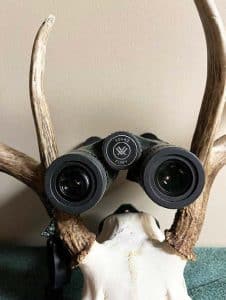

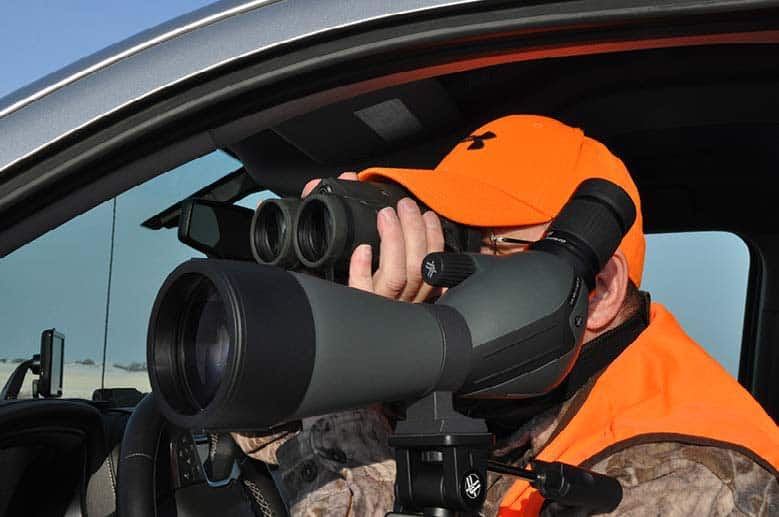
Before you ever reach for your rifle, your binoculars are doing the real work. Good glass helps you pick apart cover, spot subtle movement, and identify deer at a distance without giving away your position. Whether you’re glassing field edges, scanning timber, or watching a cut cornfield at last light, binoculars allow you to slow down and see more than the average hunter.
For most whitetail situations, a compact 8×42 or 10×42 binocular strikes the perfect balance between magnification and field of view. Lower magnification gives you a wider picture and makes it easier to track movement, while still providing enough detail to judge antlers and body size. Just like rifle scopes, low-light performance matters—early morning and late evening are when deer move, and quality binoculars help you make the most of those windows.
The biggest advantage isn’t just seeing farther—it’s seeing smarter. Instead of constantly moving or scanning with your naked eye, you can stay still and let your optics do the work. That reduces movement, keeps you concealed, and ultimately leads to more opportunities.
If you’re building out your system, it’s worth taking a look at quality options in binoculars for hunting to round out your optics setup and improve your ability to locate deer before they ever know you’re there.
Recommended Optics Setup:
Here are 3 proven options to build a well-rounded optics system:
- Vortex Crossfire II 4-12×44 Rifle Scope
A dependable, budget-friendly scope with solid clarity and low-light performance—ideal for most whitetail hunting situations. - Vortex Triumph HD Binocular
Lightweight, rugged, and built for excellent light transmission during early morning and late evening hunts, without breaking the bank. - Vortex Crossfire 1400 Rangefinder
Fast, accurate ranging with angle compensation, making it a great option for both rifle and bowhunters.
This is just my setup, for a complete breakdown on the best – take a look at our articles on the best rifle scopes, the best rangefinders, and the best compact binoculars.
Matching Your Optics to Your Hunting Style
Not every hunter needs the same setup. Where and how you hunt should dictate what you prioritize, and that starts with being honest about your environment and typical shot opportunities. The gear that works perfectly for a wide-open western hunt isn’t always the right choice for tight, eastern timber—and vice versa. Your optics should match your terrain, your stand setup, and the way deer move in your area.
If you spend most of your time in thick timber or brushy cover, a wider field of view and fast target acquisition become critical. Deer can appear suddenly and disappear just as fast, so being able to pick them up quickly and get on target matters more than high magnification. Lower power scopes and simple reticles often shine in these situations because they keep things fast and uncluttered.
Open country hunters are dealing with a completely different challenge. Longer sightlines mean longer shots, which puts a premium on magnification, clarity, and precise ranging. In these environments, being able to confidently identify a deer and place a shot at distance is everything. That’s where dialing in your scope and pairing it with a reliable rangefinder really pays off.
Tree stand hunters fall somewhere in between, but they have one unique factor—angle. Shooting from an elevated position changes your effective distance, and that’s where angle compensation becomes important. Combine that with low-light performance for those early morning and last light windows, and you start to see how a slightly different setup can make a big difference.
Conclusion: Build Confidence Through Better Optics
At the end of the day, your optics setup should do one thing—remove uncertainty. When a buck steps out, you don’t want to be questioning your sight picture, your distance, or your ability to execute the shot. You want everything to feel automatic, like second nature. That kind of confidence doesn’t come from luck—it comes from having the right tools in place and knowing how to use them.
A good rifle scope helps you see clearly when it matters most, especially during those low-light windows when mature deer are moving. A rangefinder gives you exact distance so you can make a precise shot without guessing. And in certain situations, thermal optics open up opportunities you wouldn’t otherwise have, whether it’s managing hogs or extending your effectiveness beyond daylight hours.
But it’s not just about owning the gear—it’s about understanding how it fits into your hunting style. When you take the time to match your optics to your terrain, your typical shot distances, and the way you hunt, everything starts to come together. You’re not rushing. You’re not second-guessing. You’re making deliberate, confident decisions in real time.
When you combine the right tools with the right understanding of your environment, you’re no longer guessing—you’re making informed decisions. You’re picking up deer sooner, judging distance more accurately, and setting yourself up for better shot opportunities.
And in deer hunting, that’s often the difference between tagging out and telling stories about the one that got away.