




FIELD TESTED | HUNTING APPS | 2026 REVIEW
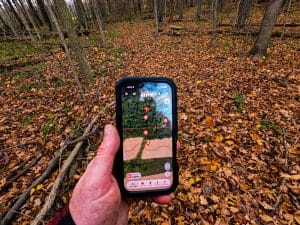
This fall, I found myself climbing into a tree on a piece of ground I’d never stepped foot on before. I recently picked up permission to hunt a property out of state at the last minute, leaving me with very little time to do any real scouting. Everything I knew about the place came from studying it on onX Hunt.
For the first three hours of that morning, I was covered up in deer. I even had a shooter buck hanging around just outside of range. Unfortunately, I couldn’t get him to close the distance enough to offer a shot I was comfortable taking. But that’s deer hunting for you. Still, considering I’d never laid eyes on the property before walking in that morning, I’d say my scouting had paid off.

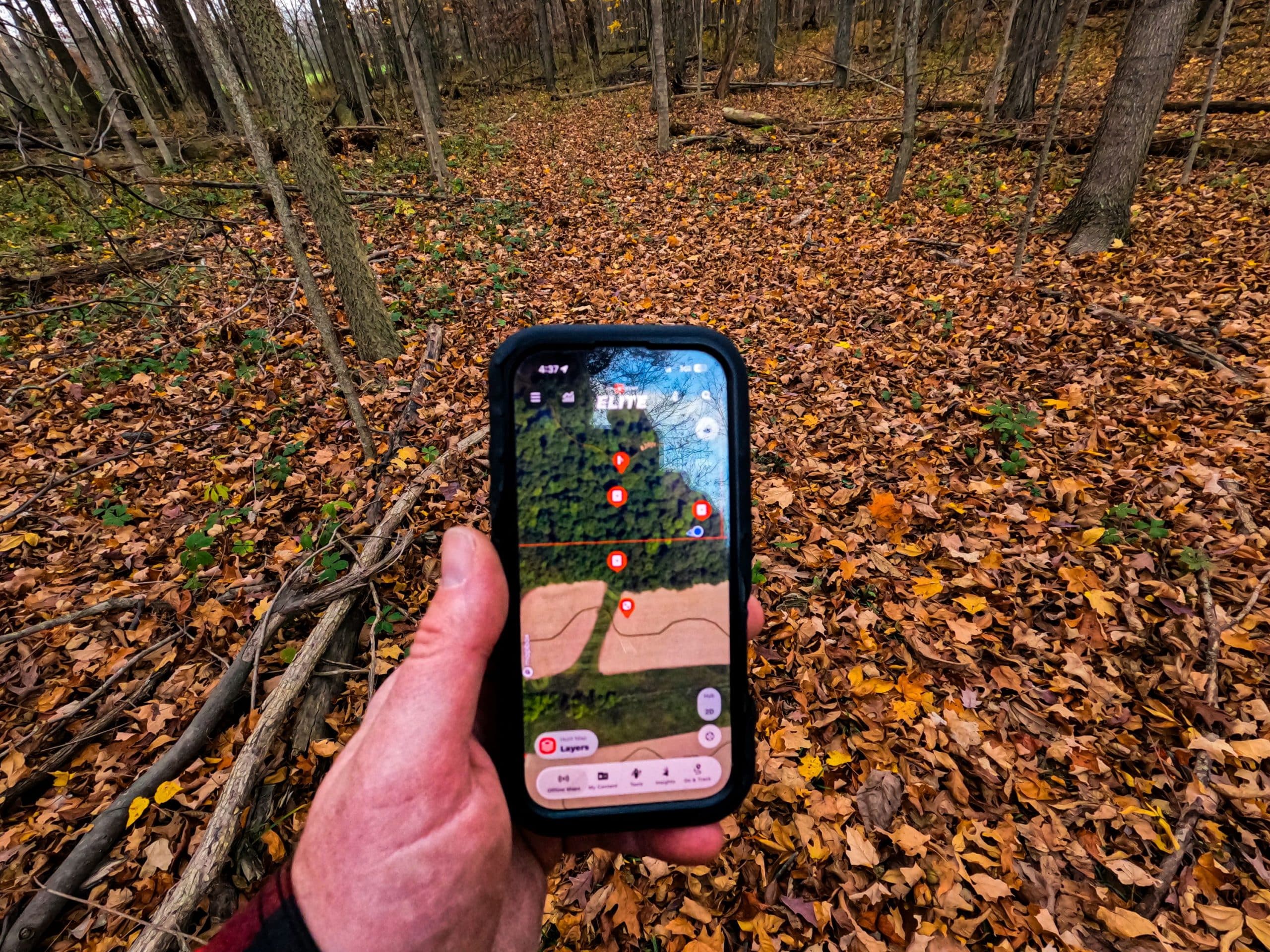
I’ve spent countless hours walking creek bottoms, checking fence rows, and looking for those little overlooked places that mature bucks like to travel. I still enjoy every bit of that. But having a good mapping app in my pocket has changed how I approach unfamiliar ground.
Over the past several seasons, onX Hunt has become something I use pretty much every day. From looking up landowners to marking scrapes and figuring out where to hang a stand, there’s quite a bit I can accomplish without leaving the house. That doesn’t mean I think every feature is worth paying for, but after putting it to work in some real hunting situations, I’ve come to appreciate what it offers.
OUR FIELD-TESTED VERDICT
Is onX Hunt the Best Whitetail Hunting App?
For the way I hunt, I’d say it is. The property ownership information, offline maps, and ability to scout unfamiliar ground are what make it worthwhile for me. I don’t think it does everything better than the competition, and the subscription isn’t something every hunter needs. But when I consider everything I use it for throughout the season, onX is the one app I’d have the hardest time giving up.
Jump to a Section
Explore the field review, app features, pricing, and comparisons.
How I Tested onX Hunt
This isn’t an app I downloaded for a weekend just to see what the features looked like. I’ve been using onX over several hunting seasons, both around home in Ohio and when traveling to hunt unfamiliar ground.
Most of my experience comes from doing the same things I would ordinarily do throughout deer season. I’ve used it to identify landowners, scout potential funnels, mark scrapes and stand trees, plan access routes, and keep track of the places I want to revisit.
I also use it when I’m trying to decide where to hunt based on the wind and what the deer might be doing. More recently, I’ve started paying closer attention to Whitetail Insights when planning my hunting days.
My opinion comes from how those tools have worked in actual hunting situations. I haven’t scientifically tested every feature against every competing app, and I’m not going to pretend I have. But after using onX in the woods for several seasons, I’ve learned which features make a difference for me and which ones I can live without.
Property Lines and Finding Landowners
One of the biggest reasons I originally started using onX was the property ownership information. Here in Ohio, where much of our hunting ground is privately owned, knowing whose property you’re looking at can save a lot of headaches.
Last year, I found myself in a situation where that feature became particularly valuable. I was trying to track a buck for a close friend and needed to figure out who owned the neighboring properties. Rather than guessing where one property ended and another began, I pulled up onX.
I could see the individual parcels, check our location in real time, follow the mapped property lines, and find the landowners’ names without having to spend half the afternoon digging through county records. It made figuring out who I needed to contact a whole lot easier.

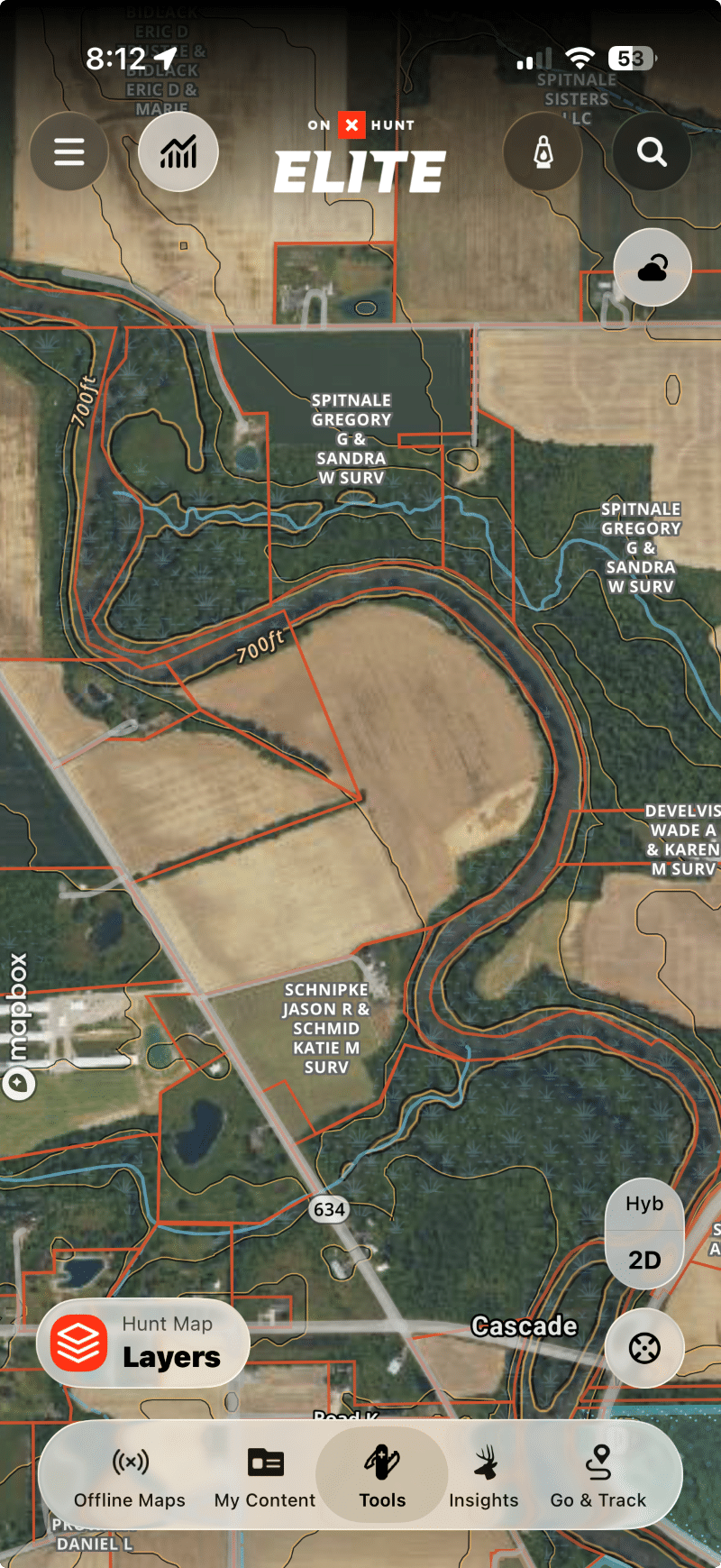
When you’re trying to track a buck, the last thing you want is to be wondering who owns the ground next door. You still need permission before entering somebody else’s property, and the lines shown on the app aren’t a substitute for a survey. Property data can be outdated or inaccurate, too. But having that information readily available sure beats trying to sort everything out on your own.
That experience probably did more to sell me on onX than any feature advertisement ever could.
I also use the property information when looking for new hunting permission. Some of my favorite places to hunt are smaller pieces of timber that most people drive past without giving them much thought.
A twenty-acre woodlot, an old fence row connecting two farms, or a brushy creek bottom can sometimes offer some pretty good hunting. Being able to identify the owners before knocking on doors saves time. It doesn’t guarantee permission, but at least I know where to start.
Offline Maps Are Worth Having
Another feature worth mentioning is offline mapping. One of the biggest advantages of having a hunting GPS app like onX is being able to navigate when cell service disappears. Anyone who’s hunted down in a creek bottom knows that can happen pretty quickly.
As long as I’ve downloaded the map beforehand, I can still see my location and use the GPS without having service. That’s especially useful when hunting somewhere unfamiliar.
The important part is remembering to download the area while you still have a connection. I also make sure my phone is charged before heading into the woods. A map doesn’t do you much good if your battery is dead.
Finding Funnels Before Ever Seeing the Property
That out-of-state hunt I mentioned earlier was probably the best example I’ve had of how useful onX can be for scouting.
I picked up permission at the last minute, and with the property being out of state, I didn’t have the luxury of spending several afternoons walking around looking for deer sign. I had to make a plan with what I could see on my phone and my computer.
I started looking at how the property was laid out. Where were the larger blocks of timber? Where did the cover narrow down? Were there any obvious pinch points or places where deer would naturally be funneled through a smaller area?
I spent quite a bit of time looking over the property, picking apart the aerial imagery and marking locations that caught my attention.

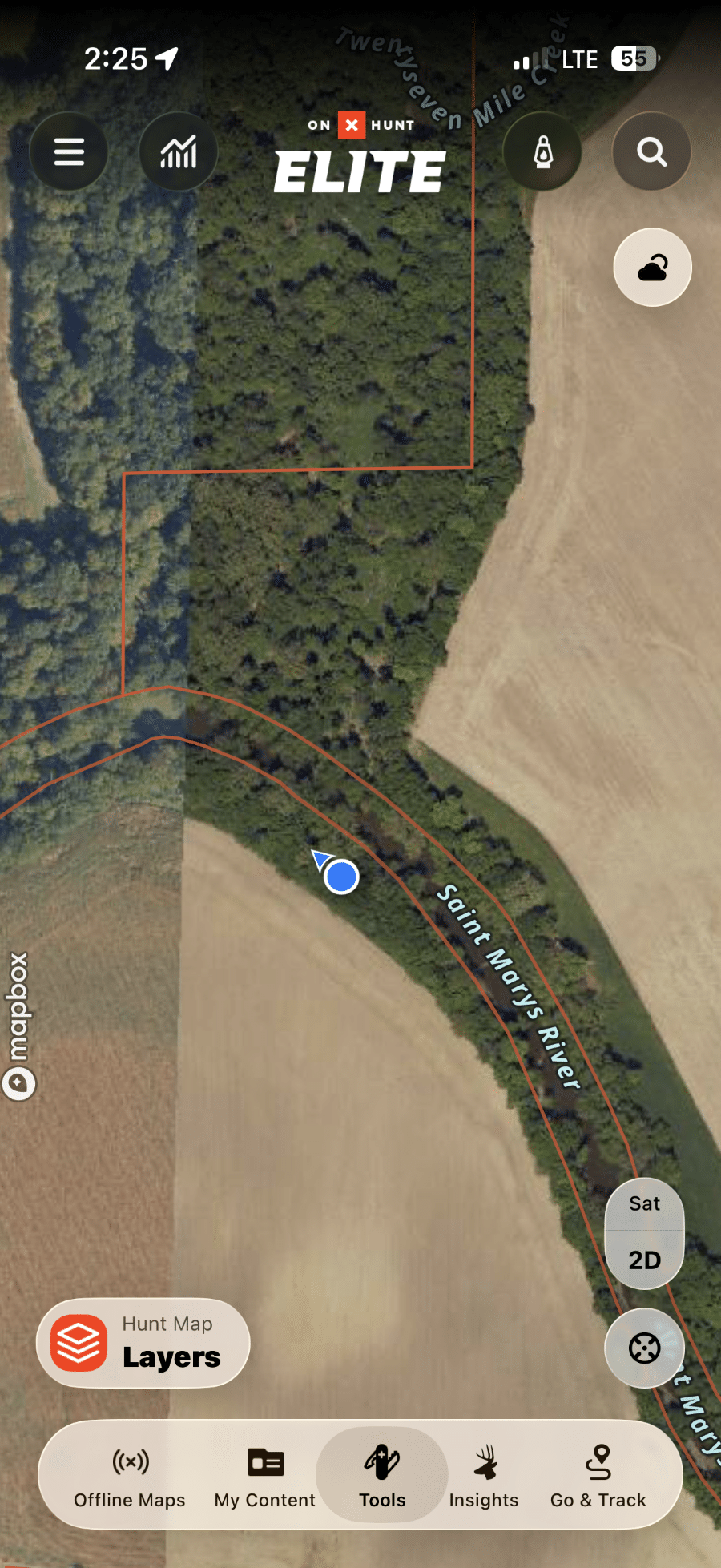
I’ve always had pretty good luck hunting funnels in November, especially the ones that aren’t immediately obvious. A narrow strip of cover between two larger woodlots might not look like much, but during the rut, a cruising buck can cover a lot of ground using those little travel corridors.
Once I had a few spots picked out, I settled on the one I thought gave me the best opportunity. I marked the location and planned my approach.
When I walked in that first morning, I was hunting completely blind. No trail cameras, no previous sits, and no firsthand knowledge of how deer were using the property. I was going off what I’d found on onX.
And it worked.
For three hours, deer kept moving through the area. Having that much activity around me on the first morning was pretty encouraging. Then a shooter buck showed up, which made things even more interesting. He never gave me the opportunity I needed, so I watched him stay just out of reach.
I didn’t leave with a buck, but I was pretty pleased with how things had gone. Had I walked into that property without studying it beforehand, there’s a good chance I would have spent the morning sitting somewhere that wasn’t nearly as productive.
That’s where I think onX really shines. When it comes to digitally scouting whitetails, being able to study terrain, identify funnels, and plan an approach before ever stepping foot on a property is a big advantage. It gives you a chance to make an educated decision on ground you’ve never hunted.

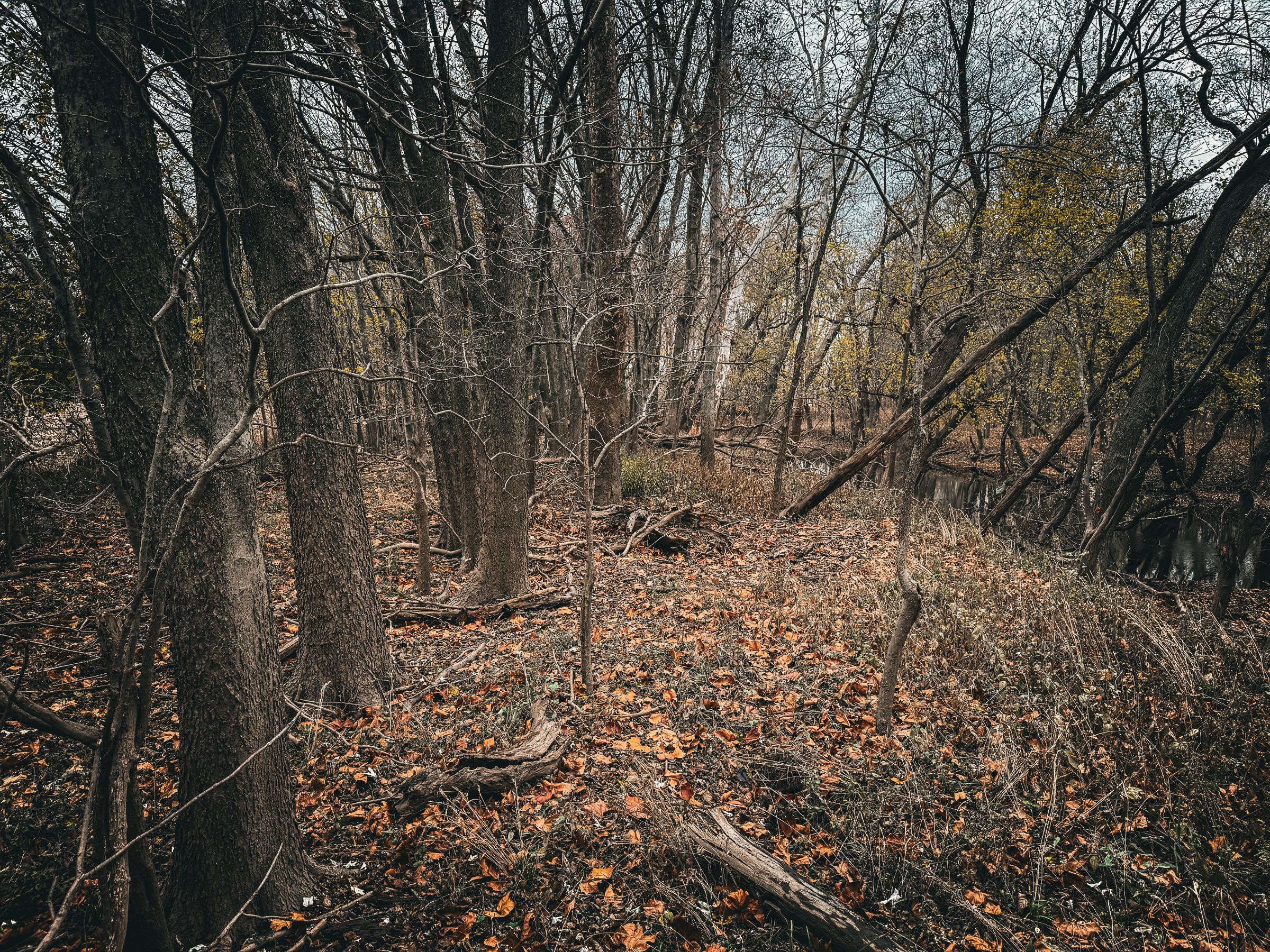
Of course, not every spot that looks good on a map will turn out that way. I’ve walked into plenty of places that looked great from above and found next to nothing. Sometimes the timber is more open than expected, or a creek crossing isn’t nearly as accessible as it appeared.
You still have to know what you’re looking for, and there’s no replacement for fresh deer sign. But having the ability to narrow down your scouting before ever getting to the property is a big advantage.
Keeping Track of Scouting and Stand Locations
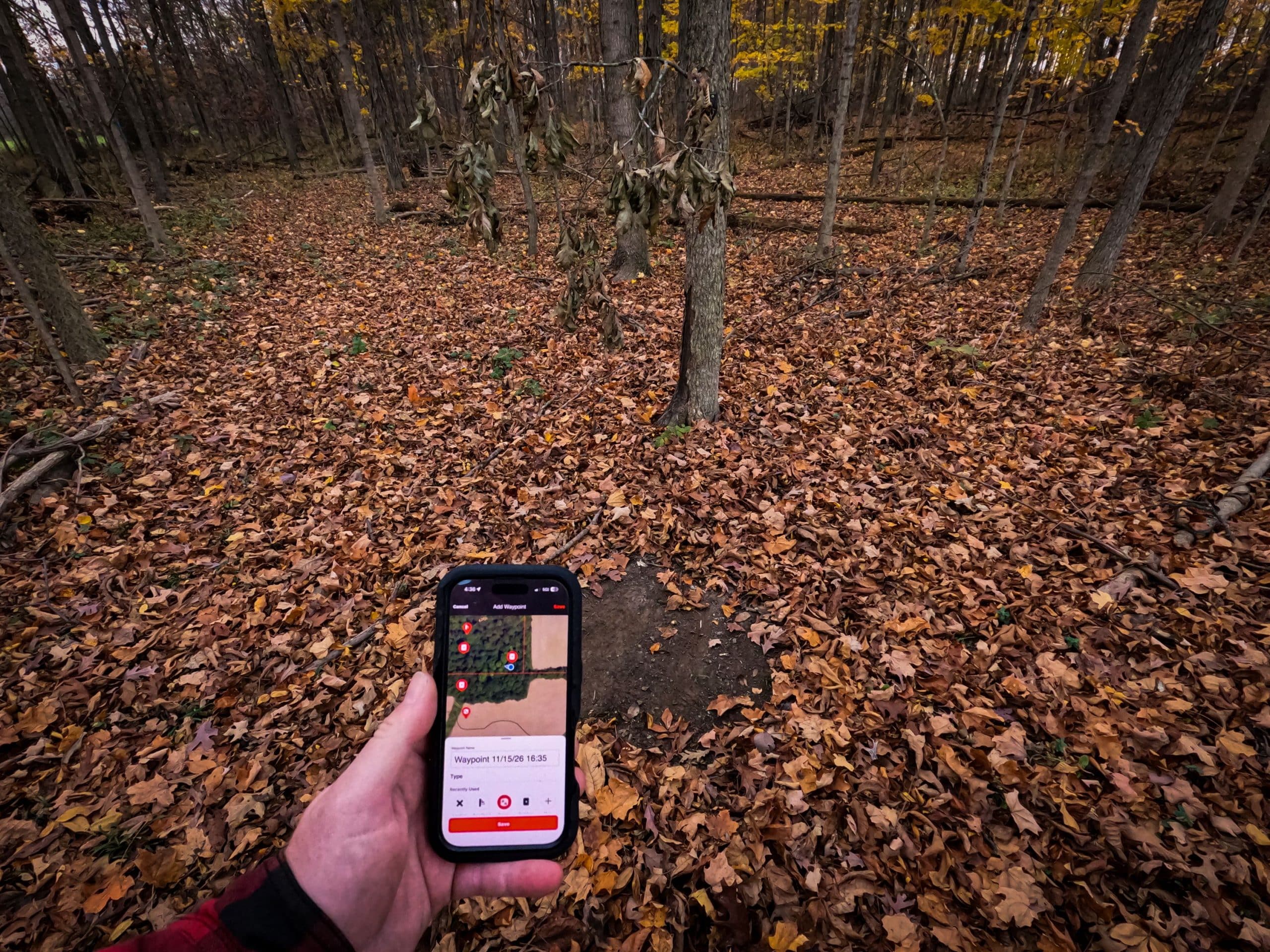
I’m pretty particular about marking things I find while scouting. Scrapes, rub lines, creek crossings, potential stand trees, and trail camera locations usually end up with a waypoint on my map.
Some of those spots never amount to much. Others turn into places I find myself hunting year after year.
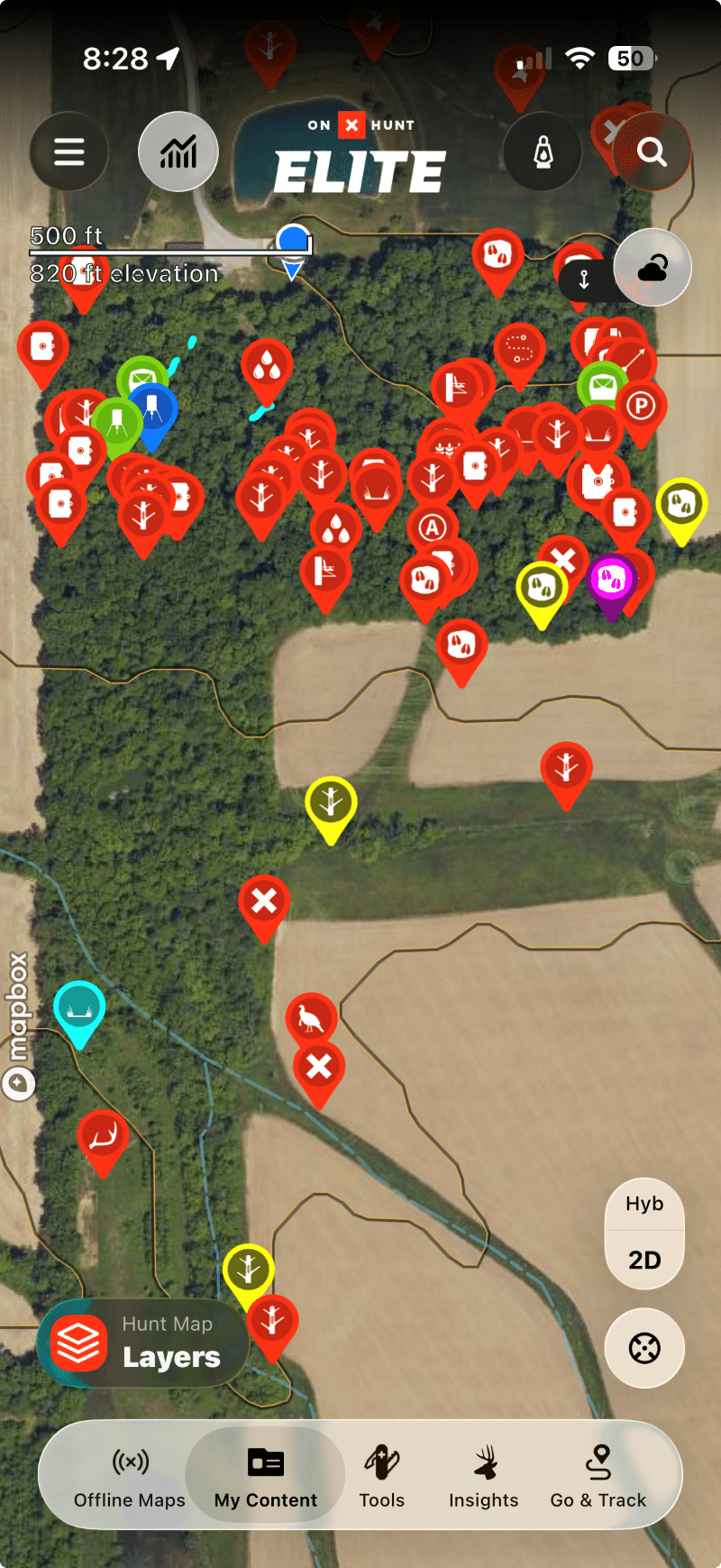
One thing I especially like is being able to revisit old scrape locations. I do quite a bit of scouting during the winter and early spring, and when I find a scrape that looks like it’s been used consistently, I’ll mark it.
Come October, I can pull up the location and check whether bucks are working it again. If not, those can still be great places to make a mock scrape and hang a cell cam.
I also like having my stand locations saved when I’m moving around with my saddle. If I’m slipping into a tree before daylight, I don’t want to be wandering around trying to remember which oak I picked out two weeks earlier.
onX also lets me look at different access routes. I’ve learned that getting into a stand without disturbing deer can be every bit as important as the stand location itself.
Sometimes the easiest route is the worst one you could take. I’ll gladly walk a few hundred extra yards along a creek or ditch if it keeps me from walking through a bedding area.
Finding a good spot on a map is only part of the equation. Once I’ve identified promising travel corridors and scrape locations, I still need to figure out where a camera will give me the most useful information. For more on that, check out our 10 tips for setting trail cameras.
Wind, Weather, and Picking the Right Day
I’m not going to pretend that an app can tell me exactly what the deer are going to do. I’ve had some great hunts when the forecast didn’t look particularly impressive, and I’ve spent plenty of supposedly perfect mornings staring at empty woods.
Still, I like having the wind and weather information available when deciding where to hunt.
onX allows you to check wind conditions and identify favorable winds for saved stand locations. That’s useful when you’re hunting several different properties and trying to decide which one makes the most sense.
I do have one complaint about relying too much on any wind forecast. Creek bottoms can make a liar out of a weatherman in a hurry.
I’ve hunted mornings when the forecast called for a steady northwest wind, only to get down into the timber and find the wind swirling around in every direction.
I still carry a wind checker, and if the wind isn’t doing what I need it to do, I’m not afraid to change plans.
The navigation tools are also useful, but I try not to spend my entire hunt looking at my phone. That’s especially true during late season whitetail hunting, when December temperatures can drain a battery pretty quickly. I’ll usually have my access route figured out ahead of time so I’m not constantly checking my screen.
Whitetail Insights: When Work, Deer, and Muskies Compete
One feature I’ve started paying more attention to is Whitetail Insights. It brings together deer movement forecasts, rut information, weather, and available trail camera data to help hunters decide when conditions might favor deer movement.
Now, I know there are hunters who won’t put much stock in movement predictions, and I understand that. I’ve never believed an app could tell me whether a mature buck is going to walk past my stand at 8:15 tomorrow morning.
But I do think there’s value in having that information when you’re trying to plan your week.
Between working full-time, spending time with my family, hunting whitetails, and chasing muskies in the fall, there’s only so much free time to go around. Sometimes I have to decide whether I’m going to spend my day in a tree, head out on the water, or pick up some extra hours at work.
That’s where Insights comes in handy.
I can look at the upcoming deer movement forecast, check the rut calendar, and compare weather conditions before deciding which days I really want to concentrate on hunting. Whitetail rut timing can vary from one area to another, and when I’m hunting somewhere unfamiliar, having that information in one place is pretty convenient.
If I’ve got a promising cold front moving through during a good stretch of the rut, I might be more inclined to clear the calendar and spend that time chasing whitetails. If the deer conditions aren’t anything special, maybe that’s the day I head out looking for a musky.
It doesn’t make the decision for me, but it gives me a little more information to work with. When you’ve only got a few days available, that’s something I appreciate.
WORTH KNOWING
Whitetail Insights is available with qualifying onX Hunt memberships. Its movement forecasts, rut information, trail camera data, and weather tools are useful for planning, but they aren’t a guarantee of deer activity. Current forecast information requires a connection, even though downloaded offline maps can still be used without cell service.
How Much Does onX Hunt Cost?
My biggest complaint about onX is the subscription cost. It isn’t that I don’t think the app is worth paying for. I’ve gotten plenty of use out of it. But when you start adding up all the subscriptions we pay for these days, another yearly charge is something worth thinking about.
There are a few membership options, and you don’t necessarily need the most expensive one.
| Membership | Price | What You Get |
|---|---|---|
| Premium — One State | $34.99/year | Mapping, property boundaries, offline maps, waypoints, weather, and qualifying scouting features for one state. |
| Premium — Two States | $49.99/year | Premium mapping and landowner coverage for two states. |
| Elite — Annual | $99.99/year | Nationwide coverage and additional advanced mapping and research tools. |
| Elite — Monthly | $14.99/month | Elite features with monthly billing. |
Pricing reference: November 2026. Subscription pricing and included features may change. Verify current plans through the official onX website.
Which onX Membership Would I Choose?
If I only hunted one state, I’d have a hard time arguing against the basic Premium membership. It has the mapping features I use most often, including property lines, offline maps, and waypoints.
The two-state membership makes sense for someone who regularly crosses a state line to hunt. You don’t need nationwide coverage just because you occasionally hunt across the border.
For someone who travels more often, Elite starts making more sense. Having access to property ownership information across the country, along with additional mapping features, is valuable when you’re looking at unfamiliar properties in several different states.
Personally, I’d choose the membership based on where I actually hunt rather than paying for features I might never use.
COMPARE MEMBERSHIPS
Find the Right onX Hunt Plan
Compare current membership options, mapping tools, and subscription prices directly through onX.
Is onX Better Than Other Hunting Apps?
There are several good apps available to whitetail hunters, and I don’t think onX necessarily does everything better than the competition.
DeerCast, for example, has put a lot of attention into deer movement and weather information. Hunters who are primarily interested in those features might prefer what it offers.
HuntStand and Spartan Forge are worth looking at, too. Each has mapping and scouting tools that might appeal to hunters with different priorities.
onX has continued adding similar tools, but the mapping is still what sets it apart for me. The property ownership information, offline maps, waypoints, and ability to scout unfamiliar ground are the features I find myself using most often.
I like having everything together rather than switching between several different apps.
There are plenty of hunting apps worth considering, and the best choice really comes down to which features you use most. If you’re interested in seeing how other options stack up, our friends at North American Bowhunter took a closer look at several popular platforms in their best hunting app comparison.
How the Major Hunting Apps Compare
| App | Primary Strength | Best For |
|---|---|---|
| onX Hunt | Property boundaries, landowners, scouting, GPS navigation | Scouting new properties and hunting multiple locations |
| DeerCast | Deer movement forecasts and weather | Planning hunts around predicted deer activity |
| HuntStand | Mapping and hunting property management | Managing stand locations and scouting information |
| Spartan Forge | Mapping and data-driven deer movement tools | Combining scouting maps with predictive information |
I wouldn’t tell someone to switch apps just because I prefer onX. If you’ve been using another service for years and it does everything you need, there’s nothing wrong with sticking with it.
For me, though, having landowner information, scouting tools, and offline maps in one place is hard to beat. Whitetail Insights is a nice addition, but the mapping is what keeps me coming back.
Reasons to Buy and Things to Consider
Reasons I Like onX Hunt
- Property boundaries and landowner information make finding hunting permission easier.
- Satellite imagery helps narrow down potential funnels and stand locations.
- Offline maps are useful when hunting without cell service.
- Waypoints make it easy to revisit scrapes, rubs, cameras, and stand trees.
- Wind tools help compare potential stand locations.
- Whitetail Insights gives me another way to plan limited hunting time.
Things I’d Consider Before Subscribing
- A yearly subscription may not make sense if you hunt one familiar property.
- Some advanced mapping tools require a higher membership tier.
- Property boundaries and ownership information aren’t always perfectly accurate.
- Wind forecasts can’t account for every local terrain effect.
- Deer movement predictions aren’t guarantees.
- Phone battery life and offline map preparation still matter.
Who Should Use onX Hunt?
I think the hunters who benefit most from onX are the ones who are constantly looking at new ground.
I can also see the value for someone doing a lot of public land whitetail hunting. Being able to identify public access, look at the surrounding terrain, and mark potential hunting locations before making the drive can save a considerable amount of time. I do most of my hunting on private ground, but I can appreciate how useful those features would be when exploring public land.
If you’re trying to get permission on neighboring properties, traveling to hunt another state, or figuring out where deer might travel through a piece of timber you’ve never seen before, the mapping tools can save a lot of time.
It’s also useful if you scout throughout the winter and spring. Being able to mark a scrape or crossing in February and find the same spot again in October is something I take advantage of regularly.
On the other hand, if you’ve hunted the same forty acres for twenty years and know every trail on the place, you might not get enough use out of it to justify another subscription.
There’s nothing wrong with a paper map, a compass, and years of knowing a property. Technology doesn’t replace experience in the woods.
But if you’re regularly scouting new properties or managing several different stand locations, I think onX is an investment worth considering.
Frequently Asked Questions About onX Hunt
Is onX Hunt worth the money for deer hunting?
I think it is if you regularly scout new properties, hunt multiple locations, or need landowner information. If you hunt one small property that you already know well, the value is harder to justify.
Does onX Hunt work without cell service?
Yes, as long as you download your offline maps before losing service. You can use the downloaded maps and your phone’s GPS to navigate without a cellular connection. Current online information still requires service.
Does onX Hunt show private landowners?
Paid memberships provide access to mapped property boundaries and available landowner information for covered states. It’s one of my favorite features, but the information isn’t guaranteed to be current or legally precise. Always get permission before entering private property.
Is onX Hunt better than DeerCast?
That depends on what you’re looking for. I prefer onX for mapping, landowners, and scouting unfamiliar ground. DeerCast is worth considering if deer movement forecasting and weather-based hunting decisions are your biggest priorities.
Do you need onX Elite for Whitetail Insights?
Whitetail Insights availability depends on the current membership offering. Check the official membership comparison before choosing a plan specifically for that feature.
Can onX Hunt help you find mature bucks?
It can help identify promising funnels, travel corridors, terrain features, and potential access routes. That’s exactly how I used it on my out-of-state hunt. But the app doesn’t know where a particular buck will be. You still have to understand deer behavior and verify what you’re seeing on the map.
My Final Take on onX Hunt
After using onX in several different hunting situations, I’d have a hard time finding another app that fits the way I hunt quite as well.
The experience tracking that buck last year showed me how valuable the landowner information could be when I needed it. My out-of-state hunt this fall gave me even more confidence in the mapping and digital scouting tools.
Going into a property I’d never hunted, picking a location from a satellite map, and spending the first three hours covered in deer is the kind of experience that sticks with you.
And while I didn’t get a shot at that buck, being able to get that close on my first morning was enough to convince me I had made a pretty good decision.
Is onX Hunt the best whitetail hunting app? For the way I hunt, I’d say it is.
The mapping alone makes it worthwhile, and the addition of Whitetail Insights gives me another reason to use it throughout the season.
I’m still going to spend plenty of time walking creek bottoms, checking scrapes, and watching fields. There’s too much you can learn from being out there to ever give that up.
But if I can spend an evening looking over a map and find a place that puts me within bow range of a mature buck the following morning, I’m certainly not going to complain about having a little help.
To me, that’s a pretty good return on the time I spent scouting.
RYAN’S FINAL VERDICT
Best for Mapping, Scouting, and Hunting Unfamiliar Ground
onX Hunt isn’t going to replace time in the woods, but it’s become one of the tools I rely on most throughout deer season. For a hunter who spends a lot of time scouting different properties, I think it’s worth the subscription.
Editorial note: This review reflects Ryan Fair’s firsthand hunting experiences and opinions. Subscription pricing and feature availability may change. Property ownership information and boundaries should be independently verified when necessary.