
The Smith & Wesson 1854 Stealth Hunter brings classic lever-action handling into the modern deer woods with a smart blend of tradition, durability, and field-ready performance. Tested during the South Dakota rut, this .30-30 lever gun proved quick to shoulder, smooth to cycle, and easy to carry through river breaks, prairie edges, and cold-weather whitetail cover. With modern upgrades like a threaded barrel, optic rail, synthetic stock, stainless construction, and suppressor compatibility, the rifle delivered the natural feel hunters love in a lever gun while adding the accuracy, control, and confidence today’s hunters expect.
November in South Dakota has a way of getting into your blood. The air carries that sharp edge that reminds you winter is coming, and every draw, ridge, and patch of cover feels alive. The rut was in full swing, and the whitetails were moving hard between bedding areas and food sources, using the river breaks and coulees like highways carved through the landscape over centuries.
It was the perfect proving ground for the Smith & Wesson Model 1854 Stealth Hunter, a rifle that sits squarely at the intersection of tradition and modern performance.

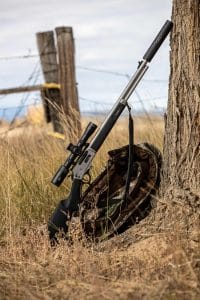
Today’s hunting world often leans toward long-range rifles, dialing turrets, and chasing every ballistic advantage possible. There is certainly a place for that style of hunting, but sometimes simplicity and instinct still matter most. The Model 1854 Stealth Hunter brings hunters back to a platform rooted in history while quietly integrating the features modern hunters appreciate in the field.
After decades of hunting, I finally took my first whitetail buck with a .30-30. Somehow, despite all the years chasing deer across North America, that moment had never happened until this hunt. What made it even more memorable was doing it with a lever-action rifle that blended old-school handling with modern upgrades, including a suppressor, premium optics, and advanced ammunition.
The result was a rifle setup that handled naturally, shot consistently, and ultimately delivered what matters most, fine venison for the table.
The New Lever Gun: Familiar Feel, Modern Capability
The first impression of the Model 1854 Stealth Hunter is how natural it feels in your hands. If you have spent time behind a traditional lever gun, everything about it feels familiar from the moment you shoulder it.
It points naturally, cycles quickly, and carries effortlessly through varying terrain. Walking the South Dakota prairie edges, slipping through shelterbelts, and navigating the steep river breaks, the rifle never felt cumbersome. At just under seven pounds, it strikes a balance that makes sense for real hunting conditions. Even with a suppressor mounted, it remained quick handling and easy to carry throughout long days in the field.
Balance is one of the rifle’s strongest traits. Some modern rifles become front-heavy once accessories are added, but the Model 1854 still maintains the lively feel lever guns are known for. It comes to the shoulder quickly and settles naturally into position without feeling awkward or overbuilt.
The oversized loop lever immediately stood out during cold-weather hunting. Heavy gloves and freezing temperatures can make some lever guns frustrating to operate, but the enlarged loop allowed smooth cycling every time. The action itself feels refined and consistent, feeding cartridges reliably while maintaining the satisfying feel lever-gun fans appreciate.

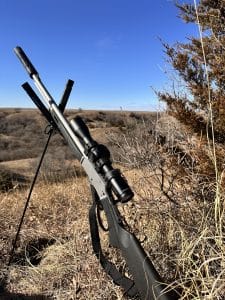
Loading the rifle was equally straightforward. The side-loading gate was smooth without being overly stiff, making it easy to top off the magazine while hunting. It is a small detail, but after spending time with rifles that fight you during loading, it becomes something you genuinely appreciate.
The flat-faced trigger was another pleasant surprise. Lever guns are not always known for crisp trigger pulls, but this one breaks cleanly and consistently. That consistency becomes especially important when settling in on a buck during those brief moments when everything slows down, and the opportunity finally appears.
Chambered in .30-30 Winchester, the rifle stays true to one of the most proven deer cartridges ever created. The .30-30 has filled freezers for generations, and there is a reason it remains relevant today. Recoil is manageable, performance is dependable, and within practical hunting distances, it continues to perform exactly as intended.
With the suppressor attached, recoil became almost nonexistent. The setup was comfortable to shoot, easy to stay on target with, and incredibly forgiving during practice sessions. That combination of reduced recoil and smooth operation also contributed to excellent accuracy and consistency on the range.
This rifle simply shoots well.
From the bench and in field situations, the Model 1854 repeatedly produced dependable accuracy with Hornady ammunition. More importantly, it delivered consistency. Shot placement remained predictable, and the rifle inspired confidence every time I pulled the trigger. In hunting situations, confidence matters just as much as raw accuracy.
Modern Features That Actually Matter
Where the Model 1854 Stealth Hunter separates itself is in the details. While it maintains the look and feel of a classic lever gun, the upgrades are purposeful rather than cosmetic.
The stainless-steel barrel and receiver provide durability in rough weather conditions. South Dakota delivered cold temperatures, moisture, dust, and changing weather throughout the hunt, and the rifle handled everything without issue.
The synthetic stock and forend keep the rifle practical without sacrificing the traditional lines lever-action fans appreciate. It still looks like a proper lever gun, but it is built to withstand the abuse modern hunters put their equipment through.

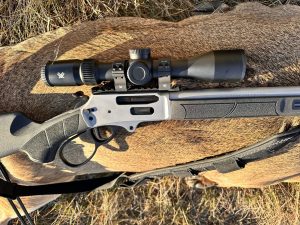
Up front, the forend includes M-Lok slots for hunters who want to customize the setup with accessories, bipods, or lights. At the same time, they remain unobtrusive for anyone who prefers a cleaner, more traditional approach.
The top rail brings the rifle fully into the modern hunting world, allowing easy optic mounting without requiring modifications. Paired with quality glass from Vortex, the rifle became incredibly versatile while still maintaining the fast handling that lever actions are famous for.
At the muzzle, the threaded barrel (11/16-24) opens the door for suppressor use. That is where the contrast between old and new becomes impossible to ignore.
You have a rifle platform rooted in the mid-1800s, chambered in one of the most traditional hunting cartridges ever created, paired with modern suppressor technology. Years ago, that combination would have seemed unusual. Today, it simply makes sense.
The suppressor reduced both recoil and report dramatically. Instead of the sharp bark normally associated with a .30-30, the rifle produced a muted pop that felt controlled and comfortable. It also allowed me to stay on target through the shot and to immediately see the bullet’s impact.
Setup and Breakdown: Suppressor and Ammunition Pairing
Pairing the Model 1854 with the right components brought the entire system together. The Banish 30-V2 proved to be an ideal suppressor choice for a compact lever gun. Lightweight and streamlined, it complemented the rifle rather than overwhelming it. On a platform designed for quick handling and easy carrying, maintaining balance matters.

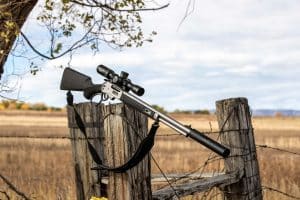
The suppressor dramatically reduced recoil and noise, making the rifle more enjoyable to shoot while improving overall control. During practice sessions and field shooting, it was easy to stay on target and maintain sight picture after the shot.

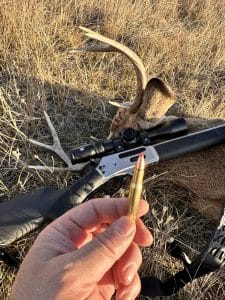
Ammunition selection played an equally important role. Hornady’s modern .30-30 offerings bring new life to a cartridge that has already proven itself for generations. Designed specifically for lever guns, the flexible-tip bullets improve aerodynamics while remaining safe for tubular magazines.
In practical terms, that translates into improved retained energy and slightly better effective range without sacrificing reliability. The ammunition fed flawlessly, grouped consistently, and performed exactly as expected when it mattered most.
Together, the suppressor and ammunition did not change what the rifle was, but they refined it.
The setup still carried the soul of a traditional lever gun, but with enough modern performance to make it more forgiving, more versatile, and more effective in the field.
Smith & Wesson 1854 Stealth Hunter: Features, Benefits & Specifications
The Smith & Wesson 1854 Stealth Hunter blends traditional lever-action styling with modern hunting features, giving deer hunters a fast-handling rifle with optic-ready capability, M-LOK® accessory options, stainless-steel durability, and proven .30-30 Winchester performance.
Key Features and Field Benefits
| Feature | Benefit for Hunters |
|---|---|
| Traditional Lever-Action Design | Offers fast handling, natural pointability, and classic deer-rifle feel in the field. |
| Picatinny-Style Optics Rail | Allows hunters to mount modern optics for improved sighting flexibility and accuracy. |
| Large Loop Lever | Provides extra clearance for cycling the rifle while wearing gloves in cold hunting conditions. |
| Smooth Lever Action | Helps hunters run the action quickly and confidently for faster follow-up shots. |
| M-LOK® Synthetic Forend | Adds modern accessory-mounting options while maintaining a practical hunting profile. |
| Threaded Barrel | Supports muzzle devices and suppressor use for reduced report and improved shooting comfort. |
| Stainless-Steel Barrel and Receiver | Improves durability and weather resistance during tough hunting conditions. |
Smith & Wesson 1854 Specifications
| Model | Smith & Wesson Model 1854 |
| Caliber | .30-30 Winchester |
| Action | Lever-action rifle |
| Capacity | 6+1 |
| Barrel Length | 20 inches |
| Overall Length | 37.8 inches |
| Weight | 7.5 pounds |
| Width | 1.6 inches |
| Rifling | 1:10-inch twist, 6 groove |
| Barrel | 20-inch 410 stainless steel |
| Receiver | Forged 416 stainless steel |
| Muzzle | 5/8-24 threads with thread protector |
| Stock | Black synthetic with textured grip panels |
| Forend | M-LOK® synthetic forend with textured grip panels |
| Front Sight | Gold bead front sight |
| Rear Sight | XS Sights® adjustable ghost ring |
| Manual Safety | Cross-bolt safety |
| Operating Lever | Large loop |
| Optics Mounting | Picatinny-style rail |
Bottom Line
The Smith & Wesson 1854 Stealth Hunter is built for hunters who appreciate the heritage of a lever-action rifle but want the advantages of modern design. With its optic-ready rail, M-LOK® forend, threaded barrel, stainless construction, large loop lever, and proven .30-30 chambering, it is a practical, fast-handling deer rifle designed for real hunting conditions.
Field Test: A South Dakota Rut Hunt
Everything eventually comes down to the field, and few places test hunting equipment better than a November whitetail hunt in South Dakota. We started the morning overlooking a deep, rugged valley cut through the country like a scar. From above, you could see everything, from east-facing slopes catching first light, shadowed pockets of cover, and strips of brush connecting bedding areas to food.
Coyotes were already working the wind below us, slipping along the edges and stopping occasionally to listen before moving on again. At one point, two coyotes broke into a playful chase through the brush before disappearing over a ridge.
The morning remained quiet for deer movement, so we eventually dropped into the river breaks. What looked open from above quickly turned into a maze of cuts, fingers, and hidden pockets. Deer sign was everywhere. Does filtered through the cover while smaller bucks moved cautiously between openings. Several larger whitetails showed themselves briefly before slipping back into the terrain.


As the day progressed, we shifted toward the edge of the breaks where the country opened into prairie beside a harvested cornfield. It was the perfect transition area for rutting bucks moving between bedding cover and evening feeding locations.
The birds signaled the change first. Pheasants exploded from the grass with loud cackles while sharp-tailed grouse glided toward the remaining grain. Evening movement was beginning. I tucked into position overlooking a draw, climbing out of the breaks, and expected a long wait, but the rut had other plans.
Movement appeared much earlier than expected. A buck stepped from the draw with his head up, moving confidently across the open ground. He paused briefly, completely unaware. Everything slowed down. The rifle came to my shoulder naturally and settled into position effortlessly. The balance of the rifle immediately became apparent again in that moment. The sight picture through the optic was steady and clear. I clicked off the safety and settled the reticle.
The trigger broke cleanly. Instead of the sharp crack normally associated with a .30-30, the suppressor softened the report to something closer to a muted pop. The impact was clearly audible, and the buck dropped quickly. The harvest was clean, decisive, and exactly what every hunter hopes for.
Standing there afterward, looking back across the South Dakota breaks and open prairie, the entire system suddenly made perfect sense.
- A classic lever-action rifle.
- A time-tested .30-30 cartridge.
- Modern optics.
- A suppressor.
- Improved ammunition.
Old and new working together seamlessly.
After decades of hunting, it was strangely satisfying to finally take a buck with a .30-30. Maybe it should have happened years ago, but perhaps waiting this long made the moment even better.
And in the end, the true test of any hunting rifle is simple: did it bring home venison? The Model 1854 Stealth Hunter passed that test perfectly.
History Behind the 1854 Stealth Hunter Name
Smith & Wesson’s decision to name this rifle the Model 1854 is more than marketing. The name traces directly back to the early origins of lever-action firearm development and the work of Horace Smith and Daniel B. Wesson.

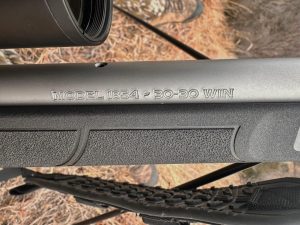
Long before the famous Winchester rifles emerged, Smith and Wesson were involved in developing repeating firearm technology. In 1854, they filed a patent for a “Repeating Magazine Firearm,” a design that eventually became known as the Volcanic.
That early work helped shape the future of lever-action rifles and repeating firearms. The modern Model 1854 pays tribute to those origins while updating the concept for today’s hunters. It respects the platform’s history without being trapped by it.
Final Takeaway on Smith & Wesson 1854 Stealth Hunter
The Smith & Wesson Model 1854 Stealth Hunter proves that innovation does not always require abandoning tradition. Instead, it demonstrates how a rifle platform can evolve while still preserving the characteristics that made it successful in the first place.
This rifle maintains fast handling, natural pointability, and the simplicity that lever guns have always been known for, while adding meaningful upgrades such as suppressor compatibility, modern optics mounting, durable materials, and improved ergonomics.
More importantly, it performs where it matters most. The rifle loaded easily, cycled smoothly, balanced naturally, and delivered excellent consistency and practical accuracy throughout testing and hunting situations. In the field, it inspired confidence from the moment it came to the shoulder until the buck hit the ground.
For hunters who appreciate the roots of hunting and shooting, and admire the legacy of the 30-30 Winchester caliber, but still want the benefits of modern advancements, the Model 1854 Stealth Hunter offers an impressive balance of both worlds. And ultimately, it proved itself in the most important way possible, by bringing home venison.
Buy the Smith & Wesson 1854 Stealth Hunter on Guns.com