



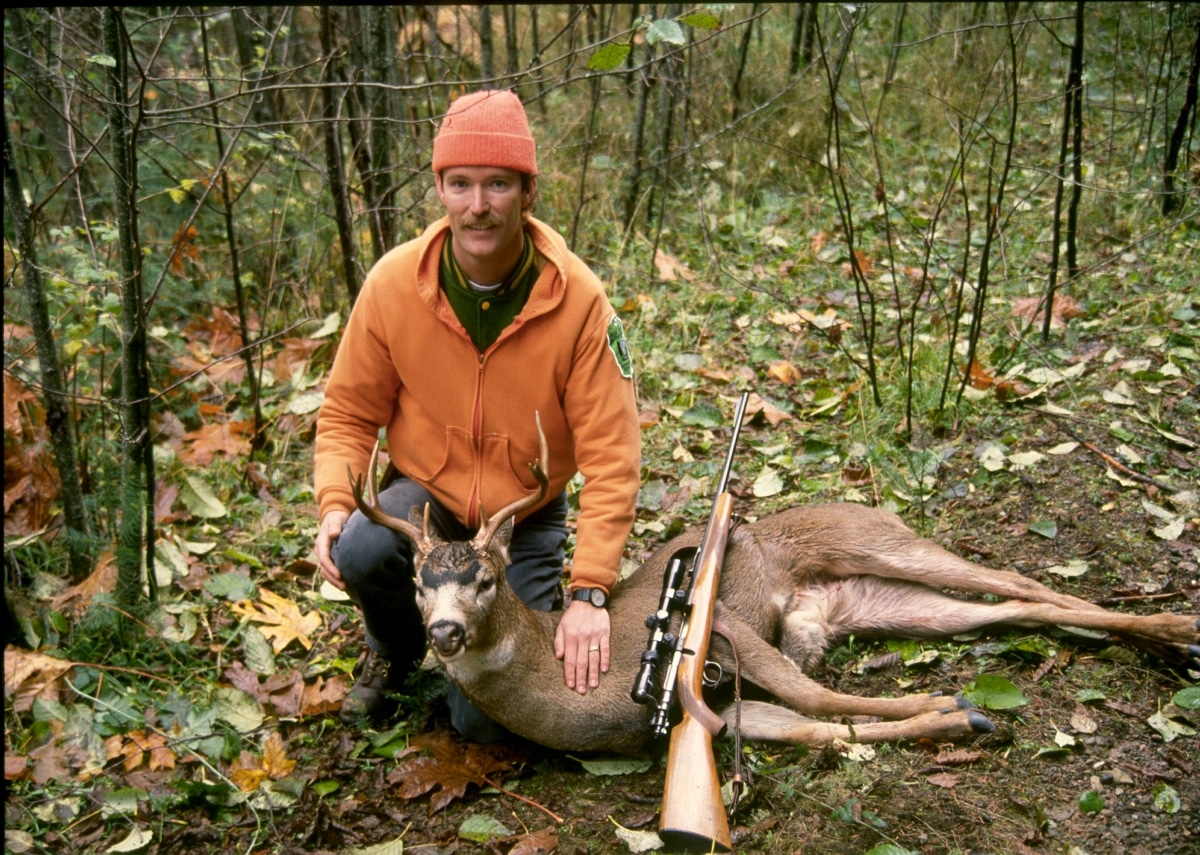
The 270 Winchester just crossed a milestone that almost no hunting cartridge ever reaches: a full century of real-world use. And there’s a reason it still shows up as the “baseline” in caliber debates (right alongside the 30-06 Springfield): it’s been putting venison in freezers for generations, it shoots flat in the distances most hunters actually take shots, and it does it without the punishment that makes people flinch.
Born in 1925, the idea was simple—take a proven case design, neck it down to .277, and push a 130-grain bullet fast enough to flatten trajectory while keeping plenty of downrange authority. Winchester Repeating Arms wanted a modern, high-velocity hunting round that could cover everything from varmints to elk, with its sweet spot being deer. The result: a cartridge that’s easy to shoot well, forgiving in the field, and still “just works” in a way that newer rounds often try to match.
That’s why comparisons today so often pit the 6.5 Creedmoor—a modern darling designed for efficiency and longer-range precision—against the old centenarian. The takeaway from your story isn’t that one round “wins” everything. It’s that the 270 Winchester was purpose-built for common hunting ranges, and it remains brutally effective there: strong energy retention for its class, practical trajectory, and recoil that encourages good shooting habits instead of bad ones.

And for a lot of hunters, the deciding factors aren’t just numbers—they’re lived experience: the rifle you trust, the cartridge you can find anywhere, and the confidence that comes from a setup that doesn’t beat you up. From Jack O’Connor’s influence to the “go-to deer rifle” stories that never seem to end, the 270 Winchester has earned its reputation the hard way—one clean first shot at a time.
270 Winchester Overview
Isn’t it interesting how the majority of caliber comparisons for moderate-sized big game animals such as deer, antelope, and even elk, on the internet or otherwise, almost invariably use two calibers as the baseline around which all similar calibers are compared: the .270 Winchester and the .30-06 Springfield. It doesn’t take a rocket scientist to figure out why. It’s because these two have been around for a very long time (the .270 was conceived in 1925 and the .30-06 in 1906) and both form the baseline for a great many newer cartridges that try to improve on these two calibers. So, keeping in mind that this article is not a discussion about what the best deer caliber out there is, but about the .270 Winchester, let’s have a look at the .270 and a couple of other calibers, making sure as best we can to compare apples to apples. By that I mean keeping things within the operational envelope (game animals) the calibers were designed for.
As I mentioned, the .270 Winchester was developed in 1925. At the time, shooters were looking for a high velocity, flat shooting round that could be used on game from varmints to elk, with the “happy place” being deer. Winchester wanted to produce a round that outperformed the .30-06, took advantage of the improvements in smokeless powders, and was proprietary (Winchester only). They took the .30-06 casing and necked it down to receive a .277-inch, 130-grain bullet. They assumed that the lighter bullet and similar powder loads with the newer smokeless powders would result in faster, flatter trajectories while not losing knock down power at distance; as a matter of fact, it actually increased it compared to the .30-06, even though the .30-06 used heavier bullet weights. Their assumption proved true. It also produced significantly less recoil, which was a blessing for varmint and target shooters. Thus, the .270 Winchester was born.
270 Winchester Vs 30-06 Springfield and 6.5 Creedmoor
I used the .30-06 Springfield vs 6.5 Creedmoor in this article for comparison calibers because the .30-06 is another good, very popular caliber, and the 6.5 Creedmoor seems to be the darling of the day to try to give the .270 a run for its money.
A short bit of background on these other two calibers:
- The .30-06 was developed in 1906 for the US. Military by Springfield Armory. It was designed from the .30-03, to be more effective with a lighter, faster-moving bullet. Later on, in 1952, Winchester designed the shorter .308, and NATO adopted it over the .30-06, again for military use. Both the US. Military and the rest of NATO switched to the newer .308 (7.62 NATO).
- The 6.5 Creedmoor was designed by Hornady in 2007. They necked down a .30 Thompson to produce a lower recoil cartridge for competitive shooting. It has a shorter casing than the .270 and .30-06 (which share the same casing length).
I’ve seen and heard all kinds of people expounding on the 6.5 Creedmoor and mockingly saying things like “You still shoot that old caliber?” (referring to the .270). So, as I questioned previously, why do the modern cartridge manufacturers always seem to use the .270 as the starting point upon which to try to design a “better” round (or the .30-06)? The answer is pretty simple, because the .270 is good, very good. Rather than discuss the details, it is easier to show you in a ballistics table of calibers in the same class:
Ballistics Table: 270 Winchester vs 30-06 Springfield vs 6.5 Creedmore
| Cartridge | Distance (yds) | Velocity (fps) | Energy (ft-lbs) | Drop (in) |
|---|---|---|---|---|
| .270 Winchester (130gr) | Muzzle | 3200 | 2956 | -1.5 |
| 100 | 2984 | 2570 | +1.2 | |
| 200 | 2779 | 2229 | 0 | |
| 300 | 2583 | 1926 | -5.7 | |
| 400 | 2396 | 1656 | -16.7 | |
| 500 | 2216 | 1417 | -33.7 | |
| .30-06 Springfield (130gr) | Muzzle | 2760 | 2199 | -1.5 |
| 100 | 2514 | 1824 | +1.5 | |
| 200 | 2282 | 1504 | 0 | |
| 300 | 2063 | 1230 | -9.0 | |
| 400 | 1858 | 1000 | -28.0 | |
| 500 | 1670 | 805 | -58.0 | |
| 6.5 Creedmoor (130gr) | Muzzle | 2960 | 2525 | -1.5 |
| 100 | 2796 | 2253 | +1.9 | |
| 200 | 2637 | 2006 | 0 | |
| 300 | 2483 | 1779 | -5.6 | |
| 400 | 2335 | 1573 | -16.1 | |
| 500 | 2192 | 1387 | -32.1 |
Key Observations (130gr)
-
The .270 retains the most energy across all distances
-
The .30-06 sheds energy quickly with lighter bullets
-
The 6.5 Creedmoor begins to show its long-range intent past 300 yards
-
Inside common hunting ranges, the .270’s trajectory advantage is real
| Cartridge | Distance (yds) | Velocity (fps) | Energy (ft-lbs) | Drop (in) |
|---|---|---|---|---|
| .270 Winchester (150gr) | Muzzle | 2850 | 2705 | -1.5 |
| 100 | 2693 | 2414 | +1.6 | |
| 200 | 2540 | 2148 | 0 | |
| 300 | 2392 | 1905 | -7.0 | |
| 400 | 2249 | 1684 | -20.2 | |
| 500 | 2111 | 1484 | -40.2 | |
| .30-06 Springfield (150gr) | Muzzle | 3080 | 3153 | -1.5 |
| 100 | 2878 | 2757 | +1.8 | |
| 200 | 2684 | 2402 | 0 | |
| 300 | 2497 | 2078 | -5.3 | |
| 400 | 2319 | 1791 | -15.0 | |
| 500 | 2148 | 1536 | -31.1 | |
| 6.5 Creedmoor (147gr) | Muzzle | 2695 | 2370 | -1.5 |
| 100 | 2577 | 2168 | +2.1 | |
| 200 | 2464 | 1981 | 0 | |
| 300 | 2354 | 1807 | -7.4 | |
| 400 | 2247 | 1647 | -20.3 | |
| 500 | 2143 | 1498 | -39.3 |
Key Observations (150gr)
-
The .30-06 clearly leads in energy across all distances
-
The .270 shoots flatter inside 200 yards
-
The 6.5 Creedmoor overtakes the .270 beyond ~400 yards
-
Each cartridge is now operating in the bullet weight it was designed for
It took me many hours to build this table. I created it with a few requirements: the tables had to be from ballistics shot at sea level, the cartridges used for comparison had to be off the shelf factory loads (not hand loaded), and the rounds used for each caliber had to have the least drop at 500 yards, zeroed at 200 yards, regardless of manufacturer or even within a single manufacturers line of cartridges for the same bullet weight.
I have to stick a caveat in here now: These bullet weights are not necessarily the “best” weights for these calibers when matched against each other by bullet weight. The .270 was designed for the 130-grain bullet. However, the .30-06 was made with the 150 grain bullet in mind, and the ballistics show it. The 6.5 Creedmoor was designed for a 140-grain bullet. This article, however, wasn’t meant to do a full comparison of all the bullet weights for these three calibers.

Back in the 1970’s, when I was a teenager, I had already been hunting and shooting for years. I was avid, and I also loved to read. Some of my favorite authors were Jack London and Jack O’Connor. Having already shot a lot at that age, I was well aware that the skinny kid I was had no love of recoil. The .30 caliber simply hurt after a few rounds, and I was developing a flinch. It was very hard for me to overcome. Even when I joined the infantry and shot a lot, I still grimaced at the thought of spending a day on the range with the FN C1 (Canadian) chambered in 7.62 NATO; after a while, it just hurt. In 1978, I had managed to save a few bucks and decided to bite the bullet (pardon the pun). I attended a firearms auction hosted by the police and the conservation service, auctioning off rifles and shotguns that were confiscated for being used in criminal or illegal activities. I bid on (and won) a relatively old, beaten-up Mauser action Husqvarna chambered in .270 Winchester. Its safely was missing, and it only had iron sights, but, based on what Jack O’Connor had expounded on, I had won what I assumed to be a potentially great deer rifle. A gunsmith confirmed that the rifling was fine. He put a quarter-turn safety on it and I mounted a Leupold Vari-X II 3-9 power zoom scope on it. 47 years later, that rifle is still my go-to deer rifle. The combination of the renowned accuracy of the Husqvarna rifle and the reliable and smooth Mauser bolt action, combined with an excellent scope and the 130 grain flat shooting .270 caliber, produced a smooth, reliable, and frighteningly accurate killing machine. Since then, I have replaced the scope with another Leupold (I broke the first one by being stupid) and replaced the fixed pull original trigger with an adjustable Timney trigger, making it an even better rifle. I’m not a young man now, and I don’t shoot as well as I used to due to these aging eyes and nerves, but I can still drop a deer at 300 yards from a rest with this rifle.
Besides ballistics, there are other basic things to keep in mind when choosing a deer caliber, one being ammunition availability. The 130-grain .270 Winchester ammunition is stocked by every sporting goods and gun store that exists in North America; the same goes for the 150-grain bullets for the .30-06. I’m not so sure about the 6.5 Creedmoor. Certainly, the ammunition is readily available online, but if you manage to misplace your ammunition when you’re out hunting in the middle of Nowhere, British Columbia, and have to get to the nearest backwater looking for ammunition, you might keep the availability factor in mind.
Another thing to think about is recoil. With these three calibers, it isn’t a big factor if you are only putting a few rounds through it in a session, but let me tell you, shooting more than a dozen 150-grain (or heavier) rounds out of a .30-06 in succession starts to hurt. Even sighting in can become noticeably uncomfortable if you struggle to zero in after nine or so shots. And if you like to shoot varmints at long distances, then a lighter recoil is a serious consideration. My .30-06 has a thick recoil pad, and I still feel it enough to get sore quickly. My .270, on the other hand, only has a plastic butt plate, and I still feel the recoil less from it than the .30-06. Certainly, a muzzle break would help, but not everyone who hunts wants or can afford the additional cost of one.
A third point to note is that the 6.5 Creedmoor has a shorter cartridge and thus a shorter, faster bolt throw. You can reload faster. But in reality, who needs faster reload speed when hunting deer? If you can’t make a kill shot on the first shot, you either need to find a better sight picture or else you need more time at the range. That may sound a little snarky, but I am a true believer in a one-shot kill; I do not consider wounding an acceptable option. If I can’t guarantee a kill shot first shot, I don’t shoot until either I move or the animal moves so that I can accomplish this.
You know, I’ll bet if there was a way to survey all the hunters out there who actually know what they are talking about, and ask them their opinion on what the best deer caliber available is, the majority might choose the .270 Winchester. Moose, bear, and even elk are another matter, but for deer, I don’t think you can beat the old centenarian.
FAQ about the 270 Winchester
1) What is the 270 Winchester best known for?
A flat-shooting, deer-capable hunting cartridge with manageable recoil—especially with classic 130-grain loads—making it easy for many hunters to shoot accurately and confidently.
2) Why do so many caliber comparisons use the 270 Winchester as a baseline?
Because it’s been around since 1925, has a massive track record on deer-sized game, and sits in the “do-it-all big game” sweet spot. Many newer cartridges are essentially trying to beat what the 270 already does well.
3) What bullet weight is the “classic” choice for the 270 Winchester?
130 grain is the traditional, design-intent load and remains the most common go-to for deer because it balances velocity, trajectory, and terminal performance.
4) Is the 270 Winchester only for deer?
No. It’s commonly used for deer, antelope, and similar game—and in capable hands with the right bullet it can be used on elk. (As always: choose a quality bullet, know your limits, and prioritize shot placement.)
5) How does recoil compare to 30-06 and 6.5 Creedmoor?
In typical hunting setups, the 270 Winchester generally feels lighter in recoil than 30-06, which can help avoid developing a flinch during longer range sessions. Many shooters also find it very comfortable compared to other “standard” big-game rounds.
6) Does the 6.5 Creedmoor “beat” the 270 Winchester?
Not across the board. The story’s point is that they were designed with different priorities: the 6.5 Creedmoor shines at longer ranges, while the 270 Winchester is exceptionally strong at the most common hunting ranges where practical trajectory and confident shooting matter most.
7) What’s the practical advantage of the 270 Winchester in the real world?
Two big ones from your story:
-
Availability: .270 Winchester hunting ammo is widely stocked across North America.
-
Shootability: flatter trajectory in typical ranges and recoil that helps you practice more (and shoot better).
8) Do I need a muzzle brake on a 270 Winchester?
Usually not. Many hunters find recoil very manageable without one. A brake can help if you’re recoil-sensitive or shoot a lot at the bench, but it adds cost and noise.
9) What zero makes sense for a typical deer rifle in 270 Winchester?
A common, practical choice is a 200-yard zero, because it complements the cartridge’s flat-shooting nature and keeps holds simple across everyday hunting distances.
10) What rifle setups have a long track record with the 270 Winchester?
Classic bolt guns have been a natural home for it for decades—especially proven actions like the Husqvarna Vapenfabriks AB rifles built on Mauser-style actions. Pair a reliable scope, such as Leupold and a good trigger like Timney Triggers, and you’ve got a simple system that can stay “done” for decades.
11) Is the 270 Winchester a good choice if I’m worried about ammo availability?
Yes, especially compared with more niche cartridges. If you’re hunting far from home (say, remote British Columbia) and something goes wrong with your ammo supply, the 270 Winchester is one of the safer bets to find locally and can always be found discounted on ammo for sale.
12) What’s the “bottom line” argument for the 270 Winchester at 100 years old?
It’s still here because it still works: flat enough, powerful enough, widely available, and comfortable enough to shoot well. For deer hunters who value a clean first-shot kill, it remains one of the smartest and simplest choices.

Per our affiliate disclosure, we may earn revenue from the products available on this page. To learn more about how we test gear, click here.
