





Most gear failures in the field are not equipment failures; they are setup and familiarity failures. Owning more equipment does little for shot accuracy and confidence when the hunter has not practiced with it from a realistic position.
A reliable hunting setup is the smallest kit you can shoot confidently from the position you actually hunt. Familiar controls, a verified point of impact, and repeatable movement matter more than extra options in the pack. Reliability starts when each part of the setup has been used enough to feel familiar.
The Gear That Actually Earns Its Weight
The essentials are a weapon you shoot weekly, a sight, a rest or stabilizer, matched arrows or ammunition, a grouped broadhead or bullet, a knife, a light, and a safety harness with a tether if you climb. These deer hunting essentials provide capability, while most additional items provide comfort.
One well-fitted weapon beats three neglected ones. For a compound bow, correct draw weight and draw length matter more than collecting equipment. Some hunters trade a spare rifle toward a better sight, some pass one down, and some sell unwanted firearms and put the money into arrows, ammo, and range time.
Everything beyond the core kit is a candidate for removal on a mobile or public-land hunt. Measure lightweight, minimalist gear in ounces carried uphill because a pack that causes fatigue on the walk in can also produce a shakier first shot.
Where You Sit Changes What You Carry
As with pack weight, shooting position determines which equipment remains useful. Building backward from that position reveals how much clearance the weapon needs, where the hunter can move, and which angles require practice.
A treestand creates downward, often twisted shots. A shorter axle-to-axle length reduces contact with rails and branches, while a drop-away arrow rest provides fletching clearance when the compound bow is not perfectly vertical.
Saddle hunting introduces a strong side and a weak side around the tree. Accordingly, tether position should be settled before opening day and tested with off-side shots from hunting height.
A ground blind replaces elevation with concealment. Its fixed window height controls whether the bow clears the roof and lower edge, making seated practice more useful than extra standing shots on an open range. Similarly, open-ground setups benefit from two or three narrow, pre-cleared lanes rather than an expected wide arc through brush or branches.
For elevated positions, a full-body safety harness and continuous attachment from the ground up are non-negotiable. The harness is part of the shooting setup because tether tension changes posture, rotation, and the feel of drawing a bow.
Tuning and Light Decide Your Real Range
Effective shooting range is not the farthest distance reached during practice. It is the distance at which every arrow or bullet lands inside a kill-sized circle on demand, from the position and in the clothing used during the hunt. That range is usually shorter than an equipment specification suggests.
Tune It Before the Season, Not During It
Basic bow tuning should expose poor arrow flight before hunting begins. A paper or bare-shaft check can reveal alignment trouble, while a pro shop can inspect cam timing before October and rule out mechanical causes.
Peep alignment also needs checking at full draw while wearing hunting clothes, including a jacket, face covering, and safety harness. If the hunter must move their head to find the peep, the setup does not match the hunting posture.
Practice should extend to roughly twice the intended hunting distance and use the exact position and clothing planned for the hunt. This does not double effective shooting range. Instead, it magnifies aiming and release errors so ordinary shots feel controlled.
Arrow speed measured in FPS offers a flatter trajectory, not automatic shot accuracy and confidence. A heavier arrow that groups consistently is more dependable than a faster arrow that scatters impacts.
The Last Twenty Minutes of Shooting Light
Low light exposes a marginal setup quickly. A multi-pin sight can become difficult to read while the target remains visible, leaving the hunter able to identify an animal but unable to aim precisely.
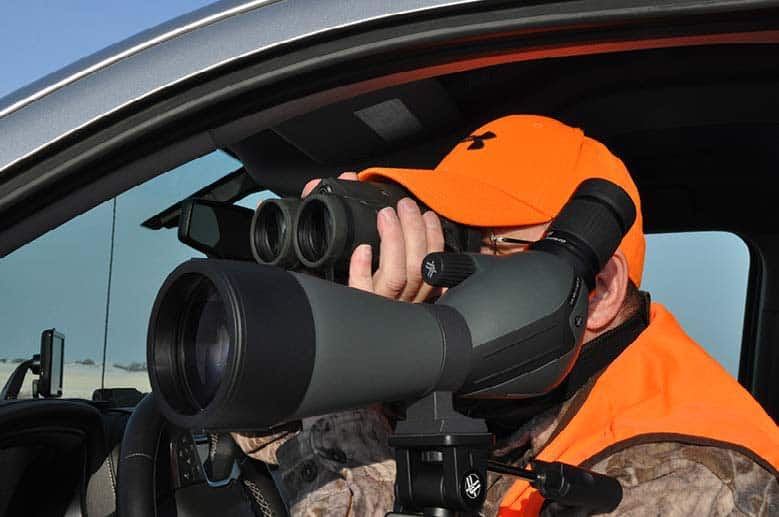
Testing optics for low-light hunting alongside the actual sight reveals which pin remains usable. A personal cutoff should come before pin brightness, target detail, or range judgment becomes uncertain.
That cutoff belongs to the setup as much as arrow choice or zero distance. Reliable range shrinks with fading visibility, awkward body position, heavy clothing, and fatigue, even when the equipment has not changed.
Build the Setup Once, Then Go Shoot It
A hunting setup is finished when it is tuned, matched to the shooting position, and practiced enough that every movement feels familiar. Reliability comes from repeating one proven arrangement rather than adding equipment whenever uncertainty appears.
Future purchases have a simple test: does the item widen the hunter’s confident range, improve shot accuracy and confidence, or solve a known clearance problem? If it only adds weight or complexity, it belongs outside the pack.
Eventually, the best setup becomes boring. The sight picture, draw, rest, and point of impact behave predictably, leaving the hunter to focus on timing and shot selection rather than equipment.

Per our affiliate disclosure, we may earn revenue from the products available on this page. To learn more about how we test gear, click here.