


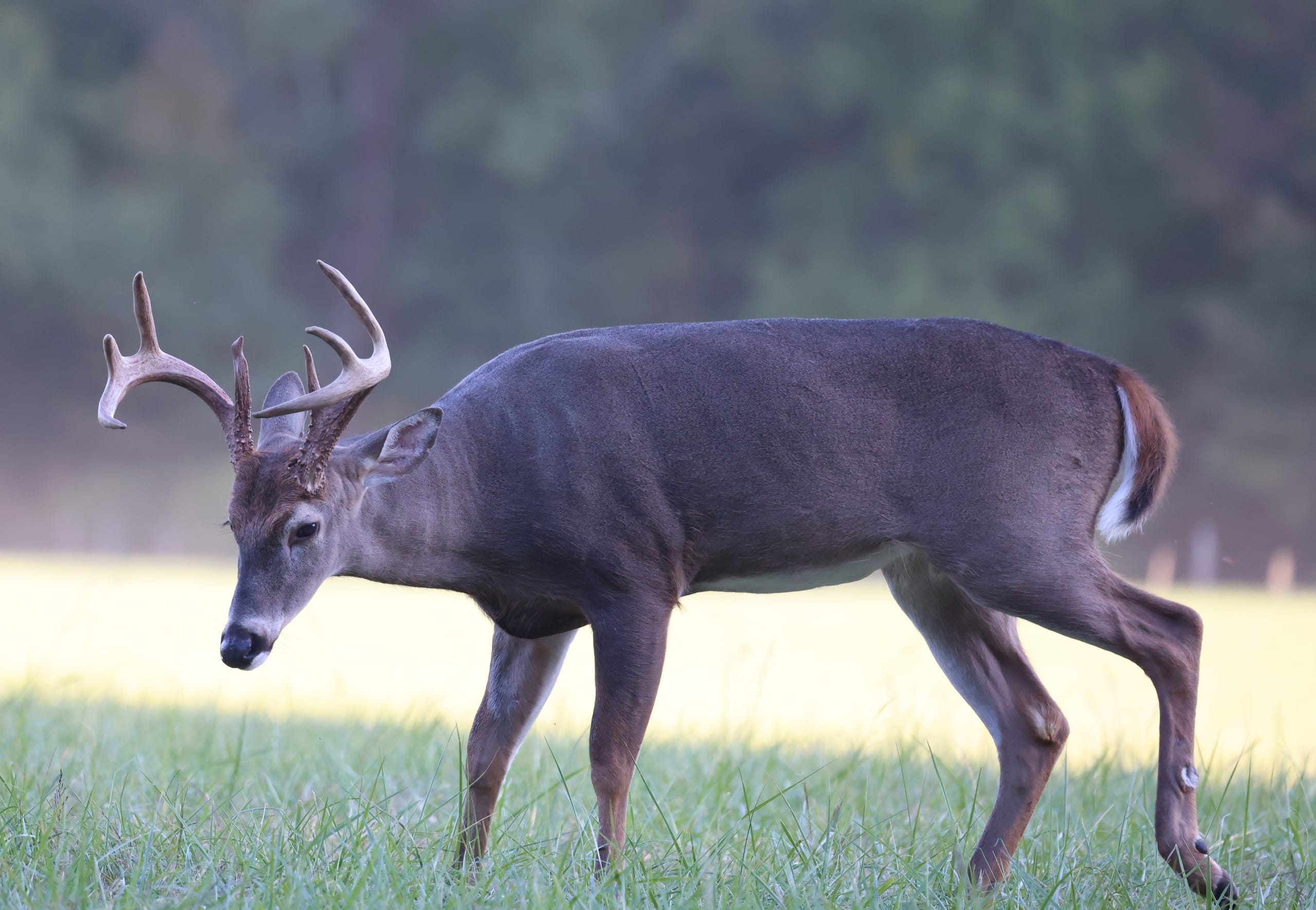
2026 NA DEER HUNTER RUT REPORT • PRESENTED BY SPYPOINT
The Seeking Phase Is Here: Where to Hunt October 26–November 1
Bucks are covering more ground, checking doe groups and testing the edges of daylight. Here’s how to hunt the final days of October as the whitetail woods turn toward November.
OCTOBER 26–NOVEMBER 1, 2026
There’s a point every fall when the woods start to feel different. A buck that has been slipping past a camera after dark suddenly shows up in daylight. A scrape line that looked quiet a few days ago gets torn up. And a deer you haven’t seen all season appears where you least expected him.
For much of the northern whitetail range, the final week of October into the opening days of November is when that kind of activity becomes increasingly possible. We’re moving through the seeking phase of the rut. Bucks are expanding their routes, checking doe concentrations and looking for the first receptive females. The chasing phase is approaching, but the action won’t shift everywhere at once.
Early breeding involving some older does may already be occurring in isolated pockets. That doesn’t mean every property is in full-blown rut mode. One ridge may have bucks cruising hard while the next farm is still showing mostly nighttime scrape visits.
Through the 2026 NA Deer Hunter Rut Report Presented by SPYPOINT, we’re following the behavioral signs that help hunters recognize those differences and make smarter stand decisions.
Here’s what matters from October 26 through November 1, what to watch for on camera and where we’d spend our best sits.
October 26–November 1 Rut Report at a Glance
Rut Phase
Seeking
Localized early breeding; chasing ahead
Hunting Focus
Doe Corridors
Funnels and bedding-area connections
Key Indicator
Daylight Bucks
Longer travel and new camera appearances
Best Strategy
Stay Mobile
Adapt to wind, fronts and fresh sign
Our Hunting Outlook
This is the week to think less about where a buck fed in September and more about where he can find does today. Prioritize secure travel routes between bedding areas, watch for daylight cruising and take advantage of cooler conditions when they arrive. Don’t burn a promising stand on a bad wind just because the calendar says November is near.
Jump to the Rut Report
What Our SPYPOINT Cameras Can Tell Us
The best evidence that bucks are changing their routine isn’t a date on the calendar. It’s a change in the deer themselves. That’s why trail cameras are so valuable right now, especially when you’re watching the same locations over several weeks.
As part of our nationwide SPYPOINT Rut Report program, camera footage can help reveal whether bucks are showing up earlier, covering more ground or spending additional time around doe groups. A new buck appearing at a scrape is worth noticing. The same buck appearing on different cameras, particularly during daylight, can be even more useful.
What we’re after is a developing pattern, not one lucky photograph. A camera can show you where deer have been; your job is to figure out the route they’re likely to take next.
The Camera Check This Week
Compare the last several days with the previous week. Look for mature bucks moving closer to shooting light, unfamiliar bucks passing through and increased activity on routes connecting doe bedding cover. These are the changes worth building a hunt around.
Visit the 2026 Rut Report gallery for field footage and ongoing updates.
Seeking Phase: Bucks Are Looking for Does
During the seeking phase, bucks are no longer satisfied with the same small loop between a bedding area and a food source. Their attention is turning toward receptive does, and that can mean more daylight travel, more visits to doe groups and more appearances in places that seemed dead earlier in the month.
This is where a hunter who knows the ground has an advantage. Look at the property and ask a simple question: If a buck wanted to check two or three doe bedding areas without crossing open ground, which route would he take?
A narrow strip of timber, a creek crossing, a saddle between ridges or the downwind side of a thicket may provide the answer. Those locations put you in the path of bucks searching, rather than waiting for one specific deer to return to a food plot.
Four Places We’d Want a Stand
Doe bedding-area edges: Set up on an accessible downwind travel route, not in the heart of the bedding cover.
Timber pinch points: Narrow cover between larger blocks of woods can funnel cruising bucks into range.
Ridge saddles and creek crossings: Natural low-effort travel routes where deer can move between doe groups.
Interior trail intersections: Places where several protected trails meet can be more valuable than an exposed field-edge scrape.
What This Means for Hunters
If daylight movement starts showing up along a route between doe groups, that’s a reason to consider a longer sit. Seeking bucks may travel at times when you would normally expect the woods to be quiet. Let actual sightings and camera patterns, not just the clock, guide your decision.
The First Receptive Does: Why One Property Can Heat Up Overnight
Some early breeding activity may be beginning, especially among older does. It isn’t widespread across every property, and the timing of breeding varies by region. But it doesn’t take many receptive does to change the behavior of the bucks nearby.
When a buck locates a receptive doe, he may stop following his usual search route and spend more time with her. That can make a previously predictable buck seem to vanish. Meanwhile, another buck could move through the same area as he checks for his own opportunity.
This is why neighboring farms can look like they’re in two different stages of the rut. Don’t assume the entire county is chasing because somebody saw one buck following a doe. Treat that observation as a local clue and adjust accordingly.
Hunting Tip: Hunt the Does Without Bumping Them
When bucks start spending more time around doe concentrations, position yourself along a route that allows you to intercept them while keeping your entry, exit and wind away from bedding cover. A great funnel isn’t worth much if getting to it sends every doe out of the area.
SPYPOINT RUT REPORT VIDEO • FROM OUR EARLIER COVERAGE
Two Bucks Square Off as the Rut Approaches
Sparring doesn’t prove peak breeding is underway, but it provides a look at the changing interactions between bucks as fall progresses.
Scrapes and Rubs: Read the Sign, Then Hunt the Route
Scrapes and rubs are still worth your attention, particularly where they line up with travel routes between bedding and feeding cover. Freshly turned soil beneath a licking branch, new rubs along a narrow trail and repeated camera visits can tell you bucks are using an area.
But here’s the trap: finding a hot scrape doesn’t automatically mean hanging a stand directly over it. A scrape might receive most of its visits after dark. When that happens, the better play may be a protected funnel a short distance away where the same buck can be intercepted during daylight.
Three Scrape Situations Worth Watching
1. Interior scrape lines: Look for multiple scrapes along a protected route that connects established deer movement.
2. Field-edge scrapes near cover: Use them to locate active deer travel, then consider the staging trail inside the woods.
3. Scrapes near doe bedding corridors: These can become useful checkpoints as seeking bucks make their rounds.
What This Means for Hunters
Follow the sign until it intersects with a stand-worthy funnel. Don’t confuse the place a buck leaves evidence with the place he’ll pass during shooting hours.
SPYPOINT RUT REPORT VIDEO • FROM OUR EARLIER COVERAGE



Big Buck Checks a Scrape
A scrape visit gives us a starting point. The hunting question is when the buck arrives and which route he’s taking to get there.
For more on building and interpreting scrape activity, see our guide to effective mock scrapes for deer hunting.
Cold Fronts Could Make the Difference This Week
A promising change in the weather can make a good rut window even better. If the anticipated cold fronts reach your hunting area this week, cooler conditions may make deer more comfortable moving during the day, especially around morning and evening travel periods.
That doesn’t mean a cold front flips a switch and starts the rut. Breeding timing is primarily tied to seasonal biology; local weather can affect when deer are visible and how hunters can approach a stand. Those are different things, but both matter when you’re trying to intercept a mature buck.
Watch the wind direction as closely as the thermometer. A noticeable temperature drop is no help if the accompanying wind blows straight into a doe bedding area. Look for the overlap between cooler weather, a safe access route and a proven travel funnel.
How We’d Hunt a Cold Front
Before the front: Evaluate changes in wind direction and pressure. Don’t force a hunt if conditions make access risky.
As cooler conditions arrive: Prioritize productive morning and evening travel routes, particularly those near doe bedding areas.
During a favorable weather window: Consider an extended sit in an interior funnel where bucks could travel between multiple doe groups.
After the front: Recheck cameras and fresh sign. Use observed activity to determine whether to stay or move.
Our Weather Strategy
Don’t hunt a stand simply because the temperature dropped. Hunt it because the temperature, wind, deer activity and access all line up. That’s when a promising location deserves your time.
Hunting Pressure: Protect Your Best Opportunities
As buck activity increases, it’s tempting to move closer to bedding cover and hunt every promising scrape. But repeated disturbance can work against you, especially on smaller properties and heavily hunted ground.
Mature bucks may change how they use an area when hunting pressure increases. They might shift their travel deeper into cover, take different routes or reduce daylight appearances in exposed locations.
This is the time to be deliberate. Know how you’re getting to your stand, understand what your wind is doing along the entire route and have an exit plan that doesn’t push deer out of the cover you’re trying to hunt.
A Simple Rule for November
A slightly less aggressive stand with clean access often makes more sense than a perfect-looking location that requires you to walk through deer. Save your best setups for the conditions that allow you to hunt them properly.
October 26–November 1: Your 7-Day Hunting Playbook
With the seeking phase underway, the goal is to intercept bucks as they move between doe concentrations. Identify the most active doe areas, watch for bucks cruising between them and choose the right conditions to make your move.
These are suggested tactical priorities, not a prediction that the rut changes phases on a specific date. Regional timing, hunting pressure and the actual weather will dictate what works on any given property.
Our Favorite Setup for This Week
A sheltered funnel connecting two doe bedding areas, with an approach that keeps your scent and footsteps away from the cover. If fresh sign and camera movement support it, that’s the sort of place we’d be willing to sit longer as November approaches.
Four SPYPOINT Camera Signals to Watch This Week
Rather than judging the rut by a single buck picture, compare behavior from one week to the next. These are four changes worth paying attention to:
1. Bucks Moving in Daylight
A buck that was appearing after dark begins passing a camera during legal shooting hours.
2. New Bucks in the Area
Unfamiliar bucks begin checking scrapes, crossings or doe travel routes.
3. A Wider Travel Pattern
The same recognizable buck appears at multiple camera locations instead of one familiar core area.
4. Persistent Doe Attention
A buck repeatedly follows, checks or stays close to a doe group, suggesting local breeding interest is rising.
No single signal establishes the exact rut stage for an entire region. When several appear together, though, they can help you identify where seeking activity is strongest on your own property.
What’s Coming Next: The Shift Toward Chasing
The first days of November are when many hunters start spending every available hour in a stand, and with good reason. For much of the northern whitetail range, the opportunity to catch a searching buck on his feet continues to improve as the breeding period approaches.
Watch for the seeking phase to begin giving way to more obvious chasing behavior in some locations: bucks trailing does closely, repeated movement through doe concentrations and sudden changes in where mature bucks spend their time. These developments won’t happen on the same day everywhere, and a short burst of chasing doesn’t mean peak breeding has arrived.
Our larger 2026 Rut Report identifies October 28 through November 12 as an important projected window for much of the northern whitetail range. Keep watching your local sign and cameras rather than treating any single date as a guarantee.
For a closer look at the stages ahead, read our breakdown of the seven key phases of the whitetail rut.
The Bottom Line for October 26–November 1
The seeking phase is where preparation can start turning into opportunity. Mature bucks are increasingly interested in does, their travel can expand and daylight sightings may become more common. Localized early breeding is beginning in some areas, but this isn’t a one-size-fits-all rut forecast.
Find the doe bedding areas, identify the safest funnels between them and let fresh sign and SPYPOINT camera activity tell you when to make your move. If a cold front brings cooler weather and the right wind, it may be the time to commit to a longer sit.
And don’t overlook the little things. A quiet walk in, a clean wind and the discipline not to pressure good bedding cover can matter as much as the date on the calendar. November is almost here. Be ready when the woods come alive.
2026 RUT REPORT • PRESENTED BY SPYPOINT
Follow the Rut as It Happens
The NA Deer Hunter Rut Report follows changing whitetail behavior through our network of SPYPOINT trail cameras, hunting observations and footage from the field.
Follow buck sightings, scrape activity and hunting strategy updates as we head into the heart of November.
Presented by SPYPOINT Trail Cameras. Hunting observations, breeding timing and recommendations vary by region and local conditions.
Per our affiliate disclosure, we may earn revenue from the products available on this page. To learn more about how we test gear, click here.
