



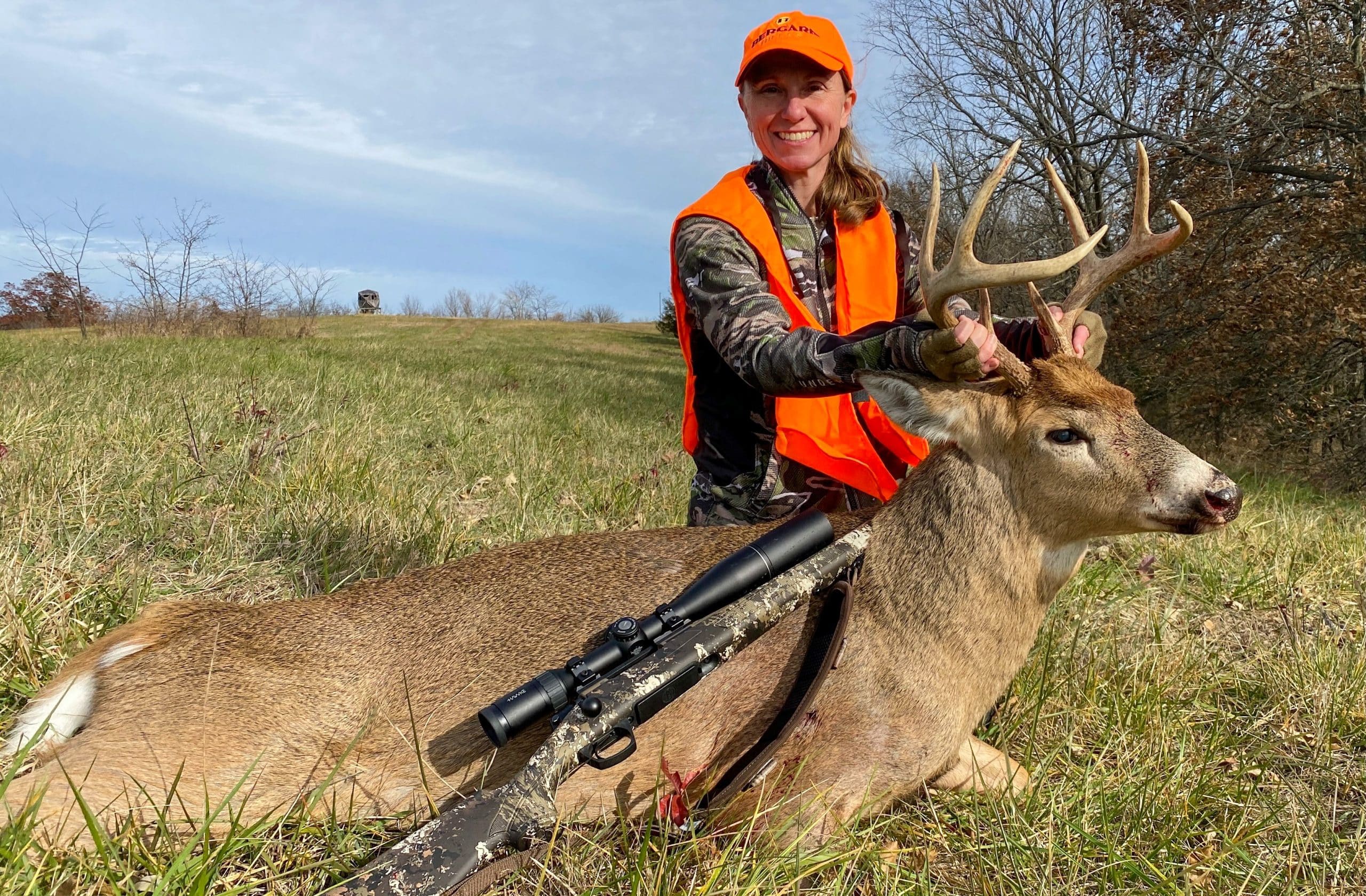
Walk into any gun shop, and you’ll find dozens of rifles promising sub-MOA accuracy out of the box. And truth be told, most factory rifles these days can shoot well enough to fill your freezer. The real difference shows up when you’re climbing a steep ridge before daylight, squeezing into a tight blind with a suppressor on the end of your barrel, or trying to get a solid cheek weld on a cold November morning while wearing a thick coat and gloves.
I’ve spent the last few years testing and hunting with a wide mix of budget, mid-range, and backcountry rifles across North Carolina whitetail woods, mid-western fields, western elk mountains, and New Zealand hills. Rather than just ranking the priciest rifles on the wall, this guide breaks down the best deer hunting rifles of 2026 by how you actually hunt.
I’ve included plenty of rifles my husband and I have personally put rounds through at the range and carried in the field, along with a few standout industry picks where a specialized action or cartridge makes more sense than a standard bolt gun.
Jump to a Section
Our Picks at a Glance: Best Deer Hunting Rifles of 2026
Not every hunter needs a lightweight carbon-fiber mountain rifle or a magnum cartridge capable of reaching across a western canyon. The best deer rifle is the one that fits your body, your budget, and the places you hunt.
Here’s how our top picks stack up. Select any rifle name to view its current retailer listing.
Prices are approximate and depend on the retailer, chambering, and configuration. Confirm current specifications and applicable hunting regulations before purchasing.
How We Tested and Chose the Best Deer Hunting Rifles
When we evaluate a hunting rifle, paper groups are only part of the equation. A rifle that shoots half-inch groups off a bench doesn’t do you much good if the bolt binds when you need a fast follow-up shot or the stock feels like an ice cube in freezing rain.
For our accuracy evaluations, we used three-shot groups at 100 yards with factory hunting ammunition. Reported accuracy reflects average group performance rather than simply selecting the tightest group fired. When we mention an individual best group, we identify it separately. We also pay attention to how each rifle performs with different factory loads, since ammunition selection can make a meaningful difference.
Here are the factors that drove our selections:
- Real-World Accuracy: We pay close attention to cold-bore consistency, accuracy across three-shot groups, and whether a rifle maintains its point of impact.
- Action Smoothness and Feeding: You shouldn’t have to fight your bolt handle after firing a round, and detachable magazines should lock in cleanly and feed without hanging up on bullet tips.
- Stock Ergonomics and Fit: I’m 5’4″ with a shorter frame, while my husband is 5’10” with an average build. A great modern hunting rifle needs a stock that fits the shooter, a comb height that gives you a real cheek weld, and a grip angle that lets your finger reach the trigger naturally.
- Trigger Quality: A crisp, predictable break around 2 to 2.5 pounds makes a huge difference for me. If a factory trigger is heavy or gritty, we note it.
- Field Practicality and Weight: Barrel length matters now that so many of us hunt suppressed. A 20- or 22-inch threaded barrel can provide a good balance of maneuverability and velocity, depending on the cartridge.
- Value for the Money: You don’t have to spend $2,000 to kill deer cleanly, so we weigh every feature against what the rifle costs.
Testing Disclosure: Rifles marked “Firsthand Tested” were evaluated through our own shooting experience. “Field Hunted” means we also carried them on actual hunts. Several specialized recommendations are identified as “Editorial Research Picks” because we haven’t personally tested those exact models.
The Best Deer Hunting Rifles of 2026
Best Overall Deer Hunting Rifle: Bergara B-14 Wilderness Sierra (.308 Winchester)
Firsthand Tested & Field Hunted

Rifle Specifications
Why It Won
When we pitted our Bergara Wilderness Sierra against our Tikka T3x Lite Roughtech, Ruger American Gen 2 Predator, and Savage Axis 2 in a head-to-head scoring test, the Bergara came out on top. It nails the balance between custom-feeling ergonomics, weatherproof construction, and dependable accuracy without crossing into custom-rifle prices.
Real-World Performance
This is the exact rifle we used in New Zealand hunting red stag, fallow deer, and wild goats, and it performed without a hiccup. At the range, we’ve tested more factory loads through our .308 Wilderness Sierra than almost any rifle in our safe, and seven hunting loads grouped sub-MOA at 100 yards, with our tightest three-shot group measuring 0.60 MOA.
The 20-inch barrel is compact enough that adding a 6-inch suppressor doesn’t turn it into a broomstick in the woods, and the Sniper Gray Cerakote shrugs off wet brush.

Who It’s For
Hunters who want one do-it-all rifle that fits almost any shooter out of the box and can handle everything from treestand whitetails to heavier big game.
Reasons to Buy
- Adjustable length of pull from approximately 13.25 to 14 inches.
- Adjustable cheek comb that raises up to 1.25 inches.
- Soft-touch stock texture that never feels freezing cold.
- Almost vertical palm-swell grip.
- Externally adjustable Bergara Performance Trigger that broke cleanly around 2 pounds.
- Excellent accuracy with factory hunting ammunition.
Things to Consider
- At 7.3 to 7.4 pounds bare, it’s heavier than ultralight sporters.
- I’m not a huge fan of top-loading hinged floorplates, though an AICS magazine conversion is possible.
- The 90-degree bolt throw offers slightly less scope clearance than some competing actions.
Value Verdict: At just under $1,100 retail, you get features that usually require aftermarket stock and trigger upgrades on competing rifles. It’s worth every penny.
Best Budget Deer Hunting Rifle Under $600: Mossberg Patriot Predator
Firsthand Tested & Field Hunted

Rifle Specifications
Why It Won
I’ll admit I was skeptical before testing our Mossberg Patriot Predator in 7mm PRC because online reviews can be mixed. Once we took it to the bench and the woods, it flat-out surprised us. Finding a sub-$600 rifle with a Cerakoted fluted barrel, threaded muzzle, factory Picatinny rail, spiral-fluted bolt, and an adjustable trigger that shoots sub-MOA is tough to beat.
Real-World Performance
During our initial range session, I shot the tightest group I had up to that point, beating rifles costing three times as much. Better yet, my husband took it hunting and harvested three does, including a clean 220-yard shot. Two dropped in their tracks, and the third went about 60 yards.
For a deer hunter on a tight budget, we recommend chambering it in .308 Winchester or 6.5 Creedmoor for cheaper practice ammo and milder recoil.

Who It’s For
Budget-conscious hunters who want modern features like suppressor threading and a detachable box magazine without spending $700 or more.
Reasons to Buy
- Exceptional accuracy for the price.
- Crisp Lightning Bolt Action trigger adjustable down near 2 pounds.
- Included Picatinny rail.
- Flush-fitting detachable magazine that feeds smoothly.
- Threaded muzzle and modern weather-resistant features.
Things to Consider
- Fixed stock length of pull around 14 inches.
- Traditional low comb made it difficult for me to achieve a comfortable cheek weld.
- The bolt feels looser and clunkier in the receiver than a Tikka or Bergara.
- The bolt handle isn’t locked down when the safety is engaged.
We also tested a Savage Axis 2 in 6.5 Creedmoor around $400 that printed a 0.61-MOA three-shot group and offers an adjustable length of pull. Its stiffer bolt and occasional feeding hangups put the Patriot ahead for us.
Value Verdict: Around $539 street price, and approximately $450 for standard blued versions, the Patriot Predator delivers impressive performance per dollar.
Best Beginner Deer Hunting Rifle: Ruger American Rifle Generation II Predator (7mm-08 Remington)
Firsthand Tested

Rifle Specifications
Why It Won
Ruger listened to every complaint hunters had about the original Gen 1 rifle and fixed almost all of them on the Gen 2. In our four-rifle comparison test, the Gen 2 Predator ranked number one in overall value.
Chambered in 7mm-08 Remington, it’s gentle on the shoulder, easy to fit to growing or smaller-framed shooters, and plenty lethal on any whitetail or mule deer.
Real-World Performance
We’ve put a lot of rounds through our Gen 2 Predator in 7mm-08, both unsuppressed and with a Precision Armament TiTrex titanium suppressor. Across our factory ammo testing, seven different loads produced sub-MOA groups at 100 yards, with a best three-shot group down to 0.65 MOA.
Loads like the 140-grain Federal Fusion and Winchester Deer Season XP shot lights out, especially with a can on the end.

Who It’s For
First-time deer hunters, youth hunters, or anyone wanting an adaptable, weatherproof rifle they won’t outgrow.
Reasons to Buy
- Adjustable length of pull via removable spacers.
- Interchangeable cheek risers.
- Soft rubber recoil pad.
- Factory Picatinny rail and included radial muzzle brake.
- Intuitive three-position tang safety.
- Excellent accuracy with multiple factory loads.
Things to Consider
- The Ruger Marksman trigger came out of the box heavier than I like, around 4 pounds.
- It still uses a bladed trigger safety.
- Primary extraction can feel stiff after firing.
- The AI-style magazine requires positive seating and clicks in more easily with the bolt open.
Value Verdict: At roughly $650 retail, the Gen 2 Predator sits in the sweet spot where you don’t need to buy a new stock or muzzle device right away just to make the rifle comfortable. The trigger, on the other hand, leaves some room for improvement.
Best .270 Winchester Deer Rifle: Tikka T3x Lite Roughtech
Firsthand Tested

Rifle Specifications
Why It Won
Tikka has a die-hard following for a reason, and pairing that famous Finnish action with the classic .270 Winchester gives you one of the flattest-shooting, smoothest-cycling deer setups money can buy.
It finished a razor-thin second in our four-rifle head-to-head test, missing first place strictly on stock adjustability.
Real-World Performance
I started my own hunting career with a .270, so testing this rifle felt like coming home. On paper at 100 yards, our T3x Lite Roughtech printed a ridiculous 0.42-MOA three-shot group with Barnes Harvest 140-grain Sierra Tipped GameKing loads.
Even crazier, we took this exact factory hunting rifle to Coleman’s Creek in North Carolina, connected on steel at 1,030 yards, and missed a 4-by-4-foot target at a mile by a couple of feet.
The bolt cycles like it’s riding on ball bearings and never once hung up a round.

Who It’s For
Hunters who prioritize silky action mechanics, crisp trigger control, and flat trajectory across open fields, power lines, and western canyons.
Reasons to Buy
- Exceptionally smooth factory bolt throw.
- Creep-free single-stage trigger adjustable near 2 pounds.
- Grippy Roughtech stock.
- Modular pistol grip inserts for a more vertical grip angle.
- Excellent accuracy with tested ammunition.
Things to Consider
- Length of pull isn’t adjustable out of the box.
- The flat comb can give me more of a chin weld than a true cheek weld.
- I’m not a fan of the factory recoil pad, and I replaced ours with a Kick-EEZ.
- The longer barrel can be cumbersome in tight blinds with a suppressor attached.
Value Verdict: Around $1,200, it’s a classic “buy once, cry once” rifle that shoots like a custom build out of the box.
Best .308 Winchester Deer Rifle: CVA Cascade
Firsthand Tested

Rifle Specifications
Why It Won
If you want a mid-priced .308 that punches way above its price tag, look closely at the CVA Cascade. CVA is owned by the same parent company as Bergara, and the Cascade benefits from that manufacturing connection. The Cascade XT also offers features such as a radial muzzle brake.
Real-World Performance
We’ve run CVA Cascades in .308 Win, .270 Win, 6.5 Creedmoor, and 6.5 PRC. Once we cleaned the factory shipping grease out of the bolt and added a light coat of oil, the 70-degree bolt cycled effortlessly.
With quality factory ammo, our .308 Cascade consistently held 1-MOA and sub-MOA groups, and fully rigged with a scope and sling, it came in at around 8.5 pounds with dead-center balance.

Who It’s For
Practical whitetail hunters who want dependable barrel accuracy, a flush detachable magazine, adjustable length of pull, and a threaded muzzle without paying four figures.
Reasons to Buy
- Adjustable length of pull using a removable spacer.
- Soft-touch fiberglass-reinforced stock.
- Flush-fitting detachable magazine.
- Threaded muzzle.
- Externally adjustable trigger tuned to 2.25 pounds during our testing.
- Strong accuracy with factory ammunition.
Things to Consider
- The standard comb can sit low for shooters with shorter frames or high scope rings.
- Spare magazines may be difficult to find in stock.
- Factory shipping grease may require cleaning to get the action operating smoothly.
Value Verdict: Sitting at $600 to $675 retail, the Cascade delivers an excellent barrel-and-trigger combination in the mid-budget class.
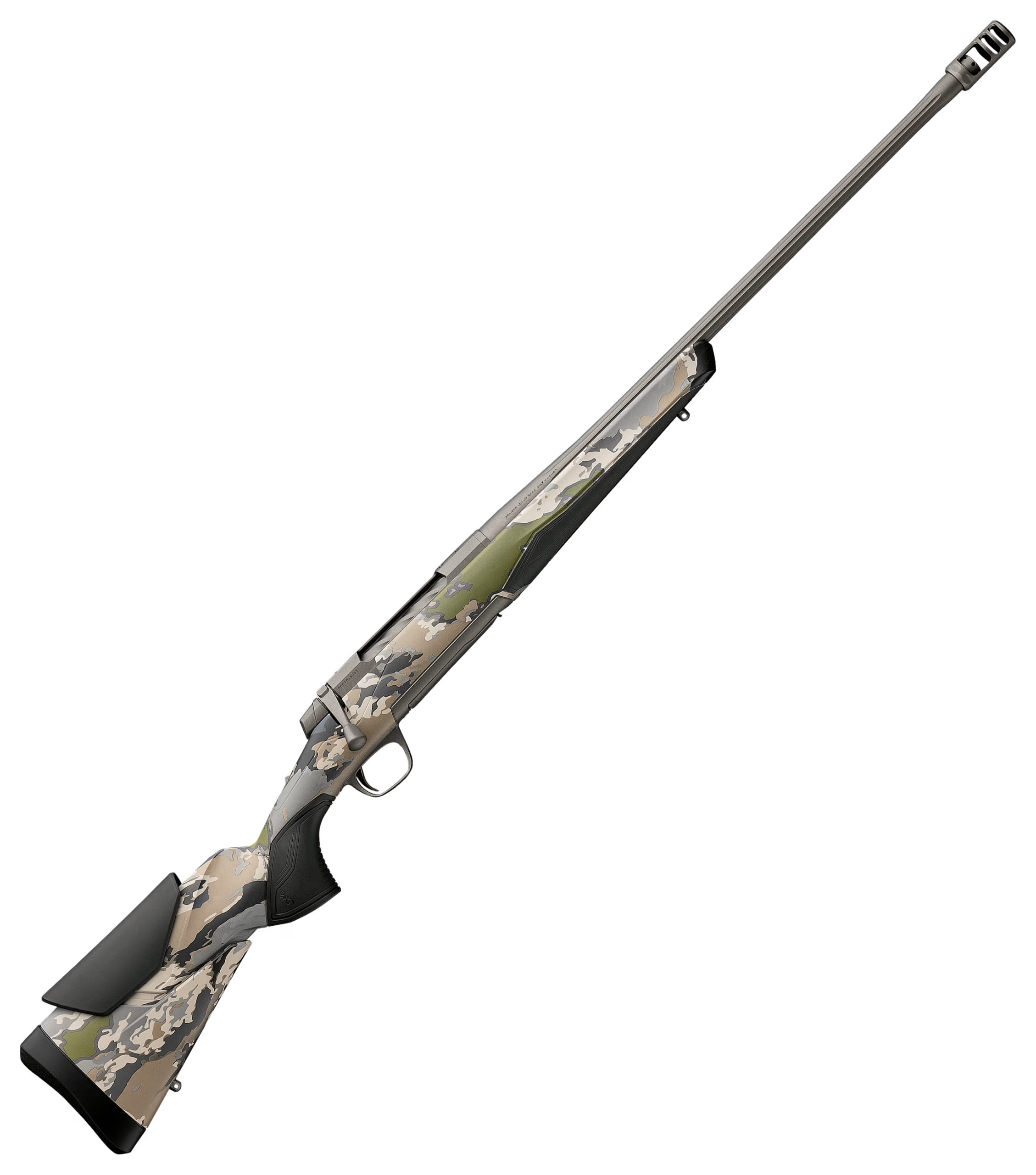
Best 6.5 Creedmoor Deer Rifle: Browning X-Bolt 2 Hunter Composite
Editorial Research Pick — Exact Model Not Personally Tested
Rifle Specifications
Why It Won
While we haven’t personally run the updated X-Bolt 2 in our own test log yet, it represents an appealing modern hunting rifle option. Browning took everything hunters already loved about the original X-Bolt, including the fast 60-degree bolt lift, tang safety, and flush rotary magazine, and upgraded the platform with features such as the DLX trigger.
Select X-Bolt 2 configurations also feature Browning’s Vari-Tech adjustable stock. Check the specific model you’re considering, since not all stock configurations are the same.
Design and Expected Field Performance
In 6.5 Creedmoor, the X-Bolt 2 offers an appealing all-day carry rifle for field edges, cutovers, and open timber. The 60-degree bolt throw gives you plenty of clearance from your scope for rapid follow-up shots, and Browning’s bolt unlock button lets you unload the chamber with the tang safety engaged.
If you prefer a heavier barrel profile and Remington 700 aftermarket compatibility in 6.5 Creedmoor, we’ve personally tested both the Bergara B-14 Ridge and CVA Cascade XT in that cartridge. Our Cascade XT produced tight groups with 125-grain Winchester Deer Season XP, 143-grain Hornady ELD-X, and 140-grain Sierra GameChanger loads.
Who It’s For
Hunters who appreciate classic Browning craftsmanship, quick bolt manipulation, and a rotary magazine that sits completely flush with the stock belly.
Reasons to Buy
- Fast 60-degree bolt throw.
- Updated DLX trigger.
- Convenient tang safety and bolt unlock button.
- Flush-fitting detachable rotary magazine.
- Multiple popular deer hunting chamberings.
Things to Consider
- We haven’t personally accuracy-tested this exact rifle.
- Stock adjustability varies by configuration.
- Some models use metric muzzle threads, so suppressor compatibility must be checked.
Value Verdict: Around $1,000, the X-Bolt 2 competes directly with Tikka and Bergara while offering quick bolt ergonomics and Browning’s distinctive rotary magazine.
Best Deer and Elk Hunting Rifle Combo: Bergara B-14 Squared Crest Carbon (7mm PRC)
Firsthand Tested

Rifle Specifications
Why It Won
If you’re buying one rifle to hunt whitetails back home and then fly out West for elk or mule deer, cartridge selection matters just as much as rifle build. I don’t recommend 6.5 PRC for elk when bulls are on the tag. I want heavy-for-caliber 7mm bullets with deep penetration.
Our Bergara Crest Carbon in 7mm PRC gives you true magnum authority in a backcountry-light carbon package.
Real-World Performance
We put five factory 7mm PRC loads through our Crest Carbon at 100 yards, and loads like the 175-grain Remington Premier Long Range Speer Impact and 165-grain Norma Bondstrike grouped exceptionally well.
Even better, we took it out to Coleman’s Creek with a Banish 30 suppressor and a Burris Veracity PH scope, ringing steel repeatedly at 600, 900, and 1,000 yards, and splashing right on the edge of the 1,268-yard target.
We also carried the original Crest platform on an eight-day Montana elk hunt. Even after taking a couple of spills in the snow, the carbon monocoque stock didn’t flinch and held zero after airline travel.

Who It’s For
Traveling hunters who want a single rifle tough enough for airline cases, light enough for steep timber, and potent enough for elk at ethical hunting distances.
Reasons to Buy
- Carbon-fiber monocoque stock with internal carbon spine.
- CURE carbon-fiber-wrapped barrel.
- Adjustable length of pull.
- Vertical grip and multiple sling attachment points.
- Lightweight construction for a magnum-capable rifle.
- Excellent long-range testing performance.
Things to Consider
- Nearly $1,900 retail is a serious investment.
- The protruding AICS magazine sits where many hunters naturally hold the rifle when carrying it one-handed.
- Magnum ammunition and recoil can be more demanding than standard deer cartridges.
For a more budget-friendly deer-and-elk combination around $1,000, the Weatherby Vanguard First Lite in .30-06 or 7mm PRC, built on the proven Howa 1500 action, is a worthwhile alternative.
Value Verdict: For a true carbon-stocked, carbon-barreled mountain magnum that shoots sub-MOA, the Crest Carbon offers an appealing alternative to considerably more expensive custom rifles.
Best Lightweight Mountain Deer Rifle: Bergara B-14 Squared CIMA CF
Firsthand Range Tested

Rifle Specifications
Why It Won
When elevation gain starts hitting 2,000 feet before sunup, every ounce on your shoulder counts. At 5.8 pounds bare, the CIMA CF shaves more than half a pound off the Crest Carbon by pairing a CURE carbon barrel with an RTM carbon-fiber stock and hinged floorplate, eliminating the protruding box magazine that gets in the way during long mountain carries.
Real-World Performance
We took a CIMA CF in 7mm PRC to the range in Oregon with a Burris Fullfield 3-12×56 scope, a suppressor, and Pendleton 180-grain Sierra Tipped GameKing ammo to prep for a cow elk hunt.
Fully rigged with glass and a can, the whole setup weighed under 8.5 pounds and held dead-on accuracy out to 300 yards in gusty wind.
For pure mountain deer hunting, mule deer above timberline or high-country blacktails, chambering it in 6.5 Creedmoor or .308 Winchester makes that 5.8-pound platform even easier to shoot accurately from field positions.

Who It’s For
Backcountry backpack hunters who count ounces and carry their rifle in hand or strapped to a pack all day.
Reasons to Buy
- Sub-6-pound bare weight in select chamberings.
- Lightweight carbon-fiber barrel and stock.
- Hinged floorplate for comfortable carrying.
- Rigid carbon stock construction.
- Weather-resistant Cerakote protection.
Things to Consider
- Light rifles punish sloppy bench form, especially in harder-kicking chamberings.
- You give up some stock adjustability compared with the Crest.
- Premium carbon construction comes at a premium price.
Value Verdict: At roughly $1,700 retail, it’s one of the lightest, best-balanced factory carbon mountain rifles in its class.
Best Low-Recoil Deer Rifle: Ruger American Rifle Generation II Ranch (.22 Creedmoor)
Firsthand Tested

Rifle Specifications
Why It Won
If you want virtually zero recoil paired with flat trajectory and lightning-fast handling, the compact Ruger American Gen 2 Ranch setup in .22 Creedmoor is an absolute blast to shoot. With modern heavy-for-caliber hunting bullets, the .22 Creedmoor provides impressive performance for a small-bore centerfire cartridge.
Real-World Performance
Running our Gen 2 Ranch setup in .22 Creedmoor feels closer to shooting a rimfire than a centerfire deer rifle. You can watch every bullet impact right through your scope without losing your sight picture, and the short 16.1-inch barrel maneuvers effortlessly inside cramped box blinds or thick laurel thickets, even with a suppressor mounted.
Important Hunting Regulation Note
Several states restrict .22-caliber centerfire cartridges for big-game hunting. Verify local minimum-caliber rules, permitted cartridges, and the exact rifle configuration before purchasing or using this setup for deer.
Who It’s For
Recoil-sensitive hunters, smaller-framed shooters, and suppressor fans who hunt tight cover, provided the selected cartridge is legal and appropriate for deer hunting.
Reasons to Buy
- Extremely low recoil in small-bore chamberings.
- Compact barrel for maneuvering in blinds.
- Adjustable length of pull and comb height.
- Threaded muzzle.
- Durable weather-resistant finish.
Things to Consider
- Some small-bore centerfire cartridges are not legal for deer hunting in every state.
- Verify the exact factory chambering and configuration.
- Magazine seating may require extra attention.
- Proper hunting bullet selection is especially important in small-bore cartridges.
Value Verdict: Around $630 retail, the Gen II Ranch offers excellent compact handling for hunters who prioritize maneuverability and low recoil.
Best Straight-Wall Cartridge Deer Rifle: Winchester XPR Stealth SR
Editorial Research Pick — Not Personally Tested

Rifle Specifications
Why It Won
If you hunt in a region with straight-wall cartridge restrictions, going straight to the company that developed both the .350 Legend and .400 Legend makes a lot of sense. Full disclosure: we haven’t had an XPR Stealth SR on our own range bench yet, as our hunting leans more toward standard cartridges, but Winchester’s suppressor-ready Stealth model checks many of the boxes modern straight-wall hunters ask for.
Design and Expected Field Performance
Winchester built the XPR platform to function with its Legend cartridges, including the blunt bullet profiles common to straight-wall hunting ammunition. By trimming the barrel to 16.5 inches and threading the muzzle at the factory, the Stealth SR stays compact inside tight box blinds or ladder stands, even with a suppressor attached.
Choose .350 Legend if you want lighter recoil, or consider .400 Legend for heavier bullets. Effective hunting distances depend on the ammunition, field conditions, and the shooter’s proficiency.
Who It’s For
Whitetail hunters in regions where straight-wall cartridges are legal or required who want a compact, suppressor-ready bolt-action rifle.
Reasons to Buy
- Compact 16.5-inch threaded barrel.
- Fast 60-degree bolt throw.
- Weather-resistant finish.
- Winchester M.O.A. trigger system.
- Available in popular straight-wall cartridges.
Things to Consider
- We haven’t personally tested this exact model.
- Fixed stock length of pull and comb height.
- Muzzle threads vary by chambering.
- Straight-wall cartridge regulations differ by jurisdiction and season.
Value Verdict: At around $650 retail, the Stealth SR offers a useful combination of compact dimensions, weather resistance, and a threaded muzzle.
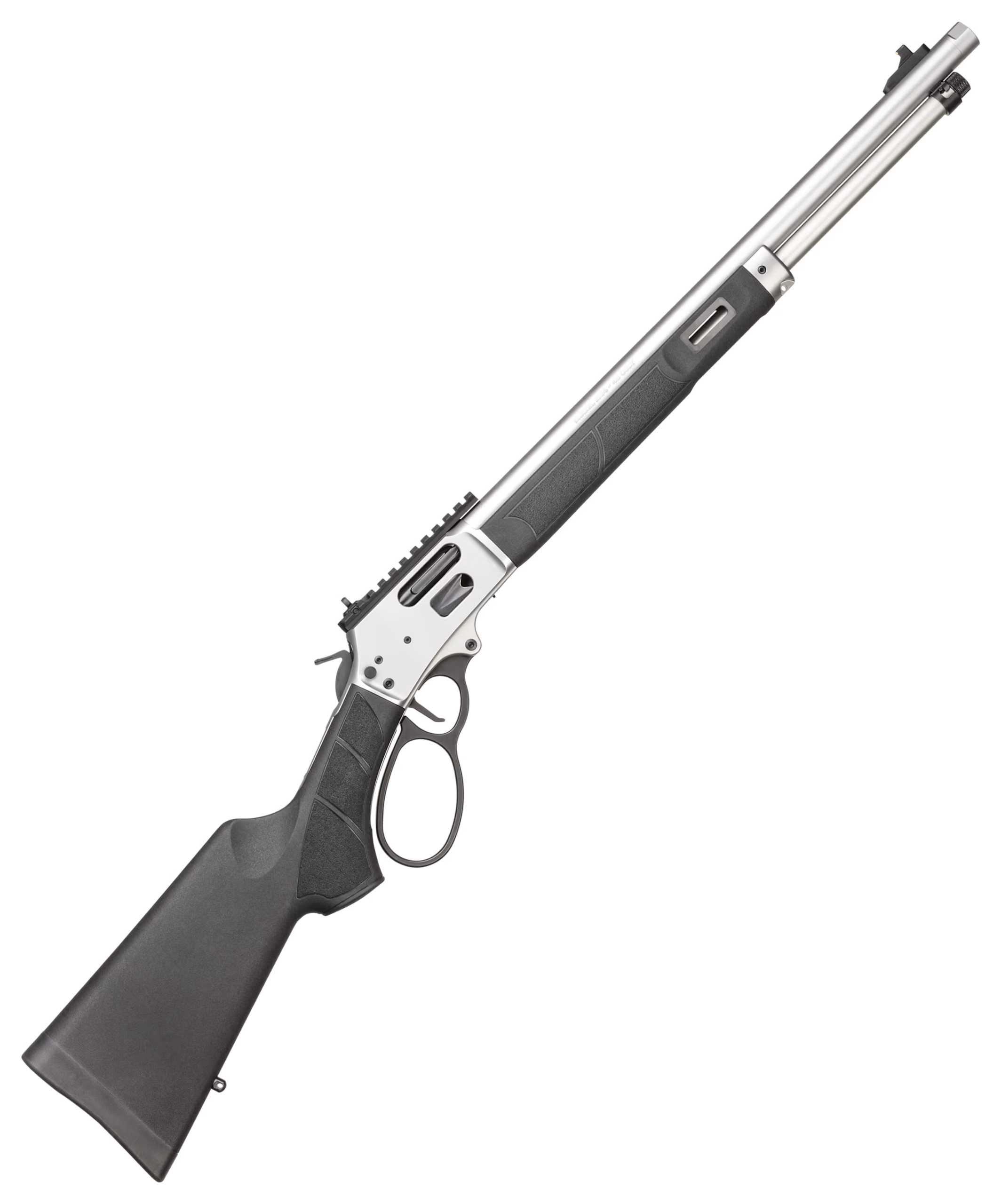
Best Lever-Action and Thick Woods Deer Rifle: Smith & Wesson Model 1854 (.30-30 Winchester)
Editorial Research Pick — Not Personally Tested
Rifle Specifications
Why It Won
Full disclosure: we haven’t had a Model 1854 on our range bench yet, as our personal safe leans heavily toward bolt actions. Still, no North American deer rifle guide is complete without a dedicated brush and lever-action pick, and Smith & Wesson’s Model 1854 in .30-30 Winchester is a standout modern lever-gun option.
Design and Expected Field Performance
Traditional lever guns always handled like a dream in thick timber, swamps, and laurel tangles, but mounting an optic or suppressor used to require awkward modifications. The Model 1854 offers a factory optics rail, ghost-ring sights, and a threaded barrel.
Paired with modern polymer-tipped .30-30 hunting ammunition such as Hornady LEVERevolution, it gives still-hunters and swamp-bottom trackers a compact platform for the close-to-moderate distances common in eastern deer woods.
Who It’s For
Thick-woods whitetail hunters, still-hunters, and traditionalists who want classic lever-gun handling with modern optics compatibility.
Reasons to Buy
- Classic lever-action handling.
- Factory optics rail.
- Ghost-ring iron sights.
- Threaded muzzle.
- Side-eject design simplifies scope mounting.
- Proven .30-30 Winchester chambering.
Things to Consider
- Pricier than many capable bolt-action deer rifles.
- Approximately 7.5 pounds in the .30-30 configuration.
- Tubular magazines require compatible ammunition.
- We haven’t personally tested its accuracy or feeding reliability.
Value Verdict: For hunters who love lever actions, getting factory threading, ghost-ring sights, and an optics rail out of the box makes the Model 1854 a compelling modern option.
Best Deer Hunting Rifle by Hunting Situation
Shopping by cartridge or brand is one way to find a deer rifle, but I think it makes even more sense to start with how you actually hunt. A rifle that feels perfect on a western mountain hunt might be unnecessarily expensive or cumbersome for someone sitting in a box blind overlooking a 100-yard food plot.
Here are the rifles I’d narrow the search to for different hunting situations.
How to Choose the Right Deer Hunting Rifle
Before you hand over your credit card, match the rifle to how and where you actually hunt.
Bolt-Action vs. Lever-Action
Bolt actions generally win on accuracy potential, trigger crispness, cartridge flexibility, and straightforward scope mounting. Lever actions shine when you’re walking thick cover, tracking in snow, or taking quick offhand shots inside 150 yards.
Barrel Length and Suppressors
Ten years ago, 22- to 24-inch barrels were standard for many hunting rifles. Today, if you hunt with a suppressor or plan to buy one soon, look hard at 16- to 20-inch barrels in cartridges that perform well at those lengths.
Adding a 6- or 7-inch suppressor to a 24-inch barrel can make climbing into a ladder stand or maneuvering inside a pop-up blind miserable. Remember that shortening a barrel can reduce velocity, depending on the cartridge and ammunition.
Rifle Weight
A bare rifle between 6.5 and 7.3 pounds hits the sweet spot for most deer hunters. Once you add a scope, rings, sling, and ammunition, you’re right around 8 to 8.5 pounds, which should be light enough to carry all day yet heavy enough to hold steady off shooting sticks.
Only drop below 6 pounds if you’re genuinely hiking steep mountain terrain or have another reason to prioritize carry weight.
Stock Fit and Adjustability
This is a bigger deal than many hunters realize. With my shorter frame, a fixed 14-inch length of pull can force me to stretch for the trigger. A low comb can also make it difficult to get a comfortable cheek weld behind a scope.
Adjustable length of pull and cheek risers are worthwhile features, especially for youth hunters, smaller-framed shooters, or families sharing a rifle.
Optics Compatibility
Look for models that ship with a suitable mounting rail or accept common scope bases so you aren’t hunting down proprietary accessories. Also check bolt throw angle. A 60- or 70-degree bolt throw generally provides more clearance under low-mounted scopes than a 90-degree bolt.
Don’t Forget the Total Cost
A rifle is only part of the hunting setup. You’ll also need a suitable scope, rings, ammunition, a sling, and potentially a case or other accessories.
I’d rather see a hunter buy a dependable $650 rifle with quality glass than spend every available dollar on the rifle and compromise on the optic.
Best Calibers for Deer Hunting
The rifle itself matters, but cartridge selection can make just as much difference. These are some of the most practical options for North American deer hunters.
6.5 Creedmoor
Easy to shoot accurately, widely available, and gentle on the shoulder. High-BC hunting bullets in the 125- to 143-grain range carry energy well beyond normal deer distances while allowing shooters to spot their own impacts through the scope.
.270 Winchester
A classic for good reason. With 130- or 140-grain bullets, it shoots flat enough that a 200-yard zero covers many open-field whitetail or mule deer opportunities without touching your turrets.
.308 Winchester
The ultimate short-action workhorse. It performs brilliantly out of compact barrels, offers endless factory ammunition choices, and is equally at home in thick woods or open fields.
.30-06 Springfield
More than a century old and still getting it done. It handles everything from 150-grain whitetail loads to heavy 180-grain bullets if you ever draw a black bear or elk tag.
.350 Legend
Built with straight-wall hunting applications in mind, it delivers minimal recoil, relatively affordable ammunition, and practical terminal performance on whitetails at moderate distances.
.30-30 Winchester
The king of the deer woods for over a century. Inside typical eastern deer hunting distances, a quality .30-30 hunting load remains a dependable choice.
7mm PRC
A modern heavy-hitter designed for long-range precision and larger game. It may be more cartridge than you need for a 100-yard eastern whitetail, but if you want one rifle that doubles as an elk and mule deer rig, the 7mm PRC is an appealing option.
Frequently Asked Questions About Deer Hunting Rifles
What is the best all-around caliber for deer hunting?
For most North American hunters, .308 Winchester or 6.5 Creedmoor is an excellent choice. Both fit in compact short-action rifles, deliver manageable recoil, perform well in shorter barrels, and have strong factory ammunition availability. If you prefer a traditional long-action cartridge with a flatter trajectory, .270 Winchester belongs in the conversation.
Is a .308 or 6.5 Creedmoor better for deer?
Inside normal deer hunting distances, deer won’t know the difference as long as you put a quality hunting bullet through the vitals. Choose 6.5 Creedmoor if you want softer recoil and favorable long-range ballistics. Choose .308 Winchester if you want heavier bullet options, a larger frontal diameter, and excellent efficiency in compact rifles.
Is a .270 enough for elk?
Yes, with appropriate ammunition and responsible shot selection. Jack O’Connor helped establish the .270 Winchester’s reputation decades ago. Modern bonded, partitioned, or monolithic copper bullets make it a capable elk cartridge when the shooter understands its limitations and only takes shots they can make confidently.
What is the best rifle for a beginning deer hunter?
The Ruger American Rifle Generation II Predator or Standard in 7mm-08 Remington or 6.5 Creedmoor. Adjustable length of pull and interchangeable cheek risers let you tailor the stock to the shooter’s frame, while the three-position tang safety provides convenient operation.
What is the best deer hunting rifle under $1,000?
The Ruger American Gen II Predator, CVA Cascade, and Mossberg Patriot Predator are all excellent values. The Ruger offers the most adaptable stock fit, the CVA provides a strong all-around .308 platform, and the Mossberg delivers impressive performance at the lowest price of the three.
What is the best rifle for a youth or smaller-framed deer hunter?
I’d start with a rifle offering adjustable length of pull and cheek height. The Ruger American Gen II Predator is a particularly good option because its stock can be adapted as the shooter grows or their preferences change. Cartridge selection should also prioritize recoil the shooter can comfortably manage.
How much should you spend on a deer rifle?
You can buy a genuinely accurate deer rifle like the Mossberg Patriot Predator or Savage Axis 2 for approximately $450 to $550. Stepping up to the $650 to $1,100 range buys you improved stocks, smoother actions, and better triggers. Just remember to leave enough money for quality glass, ammunition, and practice.
What is the best deer rifle for hunting in thick woods?
Look for a compact rifle with a 16- to 20-inch barrel and fast handling. A short-barreled bolt gun like the Bergara Wilderness Sierra in .308 Winchester, a Ruger American Gen II Ranch in an appropriate deer cartridge, or a modern lever gun like the Smith & Wesson Model 1854 in .30-30 Winchester can all work well.
Is a lever-action or bolt-action rifle better for whitetails?
A bolt-action rifle is more versatile overall. It generally offers greater cartridge flexibility, easier optic mounting, and excellent accuracy potential. But if you still-hunt dense timber or hunt from tight ground blinds where shots are close and opportunities develop quickly, a lever-action rifle is tough to beat for natural handling and quick follow-up shots.
What should I look for when buying my first deer rifle?
Start with fit, manageable recoil, reliable feeding, and a cartridge with readily available hunting ammunition. Don’t get caught up in extreme accuracy claims or the latest magnum cartridge. A rifle that fits comfortably and shoots consistently with ammunition you can afford to practice with will serve you better than an expensive rifle that doesn’t fit your needs.
Final Thoughts: Choosing Your Next Deer Hunting Rifle
After spending years testing rifles and carrying them through everything from eastern whitetail woods to western mountains, I’ve learned that there’s no single rifle that’s perfect for every hunter.
The Bergara B-14 Wilderness Sierra is our Best Overall pick because it brings together the features that matter most: excellent accuracy, useful stock adjustments, dependable operation, and a barrel length that makes sense for real hunting situations.
That doesn’t mean everyone should spend $1,100 on one. The Mossberg Patriot Predator proves a budget rifle can deliver impressive performance. The Ruger American Gen II Predator is hard to beat for newer hunters, and the Tikka T3x Lite Roughtech remains one of my favorite options for hunters who appreciate a smooth action and classic .270 Winchester performance.
Choose the rifle that fits you, matches the terrain you hunt, and leaves enough room in your budget for good optics and plenty of range time. That’s a much better formula for success than chasing the most expensive rifle in the store.
Still Deciding?
Compare Our Picks |
Find Your Rifle by Hunting Situation |
Back to Top
Editorial Disclosure: Some links in this article are affiliate links. North American Deer Hunter may earn a commission from qualifying purchases at no additional cost to you. Recommendations reflect the author’s firsthand testing experience or are clearly identified as editorial research selections.

Per our affiliate disclosure, we may earn revenue from the products available on this page. To learn more about how we test gear, click here.
