



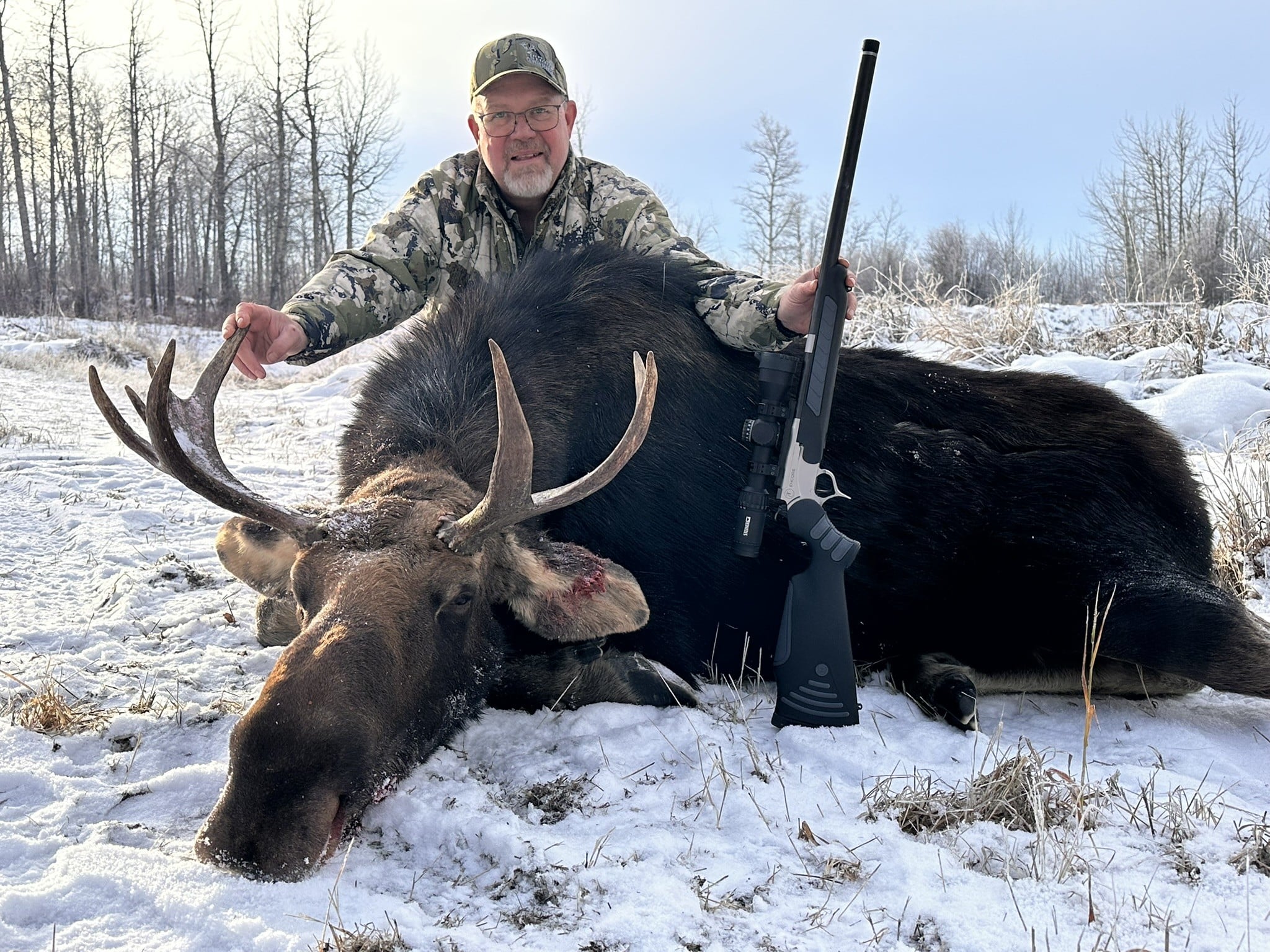
The Thompson Center Encore has earned a loyal following among hunters for its accuracy, simplicity, and versatile break-action design. Plus, the company is undergoing a renaissance, or rebirth under new ownership, adding to its loyal following! In this field review, the Thompson Center Encore ProHunter is paired with a barrel from Avient Composite Heat Release Technology and put to the test on a northern Alberta moose hunt, where lightweight handling, reliable follow-up accuracy, and real-world barrel performance mattered in the timber. The result is a modern take on a trusted rifle platform that blends proven Thompson Center Encore reliability with advanced heat management and carbon-fiber barrel technology.

A New Direction in Rifle Barrel Heat Release Technology
Barrel technology has evolved steadily over the years, but most advancements forced shooters to compromise between weight, stiffness, and heat management. Hunters typically accepted that if you wanted accuracy and stability, you carried a heavier rifle. If you wanted something light and easy to pack through the mountains or timber, you gave up some consistency once the barrel heated up.
The composite system developed by Avient changes that equation. Built around a multi-layer design, the barrel combines a traditional steel bore with a ceramic inner layer and a carbon fiber outer sleeve. The result is a rifle barrel that is lighter, stiffer, and far more efficient at handling heat than traditional steel designs.

For hunters, that translates into something practical rather than theoretical. The rifle carries more easily, maintains accuracy more consistently, and performs better across repeated shots. Instead of choosing between portability and precision, this system delivers both in the same package.
That technology became part of a memorable northern Alberta moose hunt with the Thompson Center Encore ProHunter, and it quickly became clear this was more than just another carbon-barrel story.
Thompson Center Encore Field Test: Northern Alberta Moose Hunt
It took several years to finally draw that northern Alberta moose tag, and once it showed up, everything else took a back seat. Opening day on November 1st was circled on the calendar long before the season arrived.
The area had already shown promise while elk hunting earlier in the fall. Fresh tracks, rubs, feeding areas, and a few bull sightings gave me confidence that things were lining up well heading into November.
The day before the opener only added to that feeling. Fresh signs were everywhere, and several bulls were still moving through the area regularly. Like most hunters waiting on a hard-earned tag, sleep did not come easily that night.

Opening morning started quickly. It did not take long before we glassed up a bull feeding in an alfalfa field. He was completely relaxed, even dropping to his knees to feed. It looked like he was saying grace before breakfast. The only problem was access. By the time permission was secured from the landowner, the bull had already disappeared back into heavy timber. Just like that, the opportunity was gone.
Rather than locking onto one animal, we kept moving and covering ground. Braden Frank joined me on the hunt, and his knowledge of the area made a huge difference. He and his family run Northern Backcountry Adventures, and they spend countless hours chasing big game across northwestern Alberta. More importantly, Braden comes prepared.
When you are hunting mature bull moose, recovery becomes part of the strategy before the trigger is ever pulled. We had a flatbed truck equipped with ropes, winches, and a roller setup that would eventually make the pack-out far more manageable.

As the morning progressed, we found more bulls moving through thick alder and willow along an overgrown cut line. We caught glimpses of antlers and movement, but no clean shot ever materialized before the bulls drifted back into cover.
Braden felt confident they were heading toward a timber block bordering a steep river valley, so we circled ahead and set up. The move paid off. The largest bull stepped into an opening at roughly 90 yards. It was not a wide-open shot. Branches and tree trunks created narrow shooting lanes that required patience and quick decision-making.
I settled behind the Thompson Center Encore ProHunter chambered in .308, equipped with the Avient composite barrel system and a Steiner H6Xi scope. The rifle balanced naturally and came into position easily despite the heavy clothing and awkward terrain.
The shot broke cleanly. The Hornady bullet hit hard, but the bull continued moving forward steadily, giving just enough time for a second opportunity. Those are the moments where consistency matters more than anything else. There is no time to wonder whether heat buildup or barrel shift will affect placement on a follow-up shot.
When the second opening appeared, I settled in again and fired with complete confidence. The rifle remained stable, predictable, and accurate through both shots. The sequence reinforced exactly what this technology is designed to accomplish, putting the bull down fast.

Once the bull was down, the work shifted from shooting to recovery. Anyone who has handled a mature bull moose knows the real challenge often starts after the trigger is pulled. Using the truck setup, ropes, and winch system, we carefully worked the bull roughly 130 yards out of the timber and onto the flatbed. From there, it was a long drive back to the shop where the moose was hung, skinned, cleaned, and prepared properly for aging.
That is ultimately what hunts like this are about. Good people. Hard work. Great country. And filling the freezer with some of the best meat wild game hunting has to offer.
Eliminating the Weight vs. Accuracy Trade-Off
For years, shooters accepted that increased accuracy usually meant additional weight. Heavy contour barrels reduce vibration and improve stability, but they also become tiring to carry during long days in the field. Anyone who has packed a heavy rifle through mountains, muskeg, or thick timber understands that trade-off quickly.
The Avient system changes that dynamic. By reinforcing the barrel with carbon fiber and ceramic layers, stiffness is achieved without additional steel. The structure remains rigid during firing, while overall weight is significantly reduced. In real hunting conditions, the rifle carries like a lightweight sporter but behaves more like a heavier, precision-barrel rifle.
That balance became immediately noticeable during the moose hunt. The Encore ProHunter remained easy to carry and maneuver while still delivering excellent consistency and confidence when shots mattered. The rifle balanced naturally in the hands and never felt cumbersome, even after covering significant ground throughout the day.
Heat Management and Consistency in the Field
Heat is one of the most overlooked factors affecting rifle performance.
Every shot introduces thermal buildup inside the bore. As heat accumulates, barrels can shift the point of impact and accelerate wear over time. Traditional steel barrels tend to retain heat longer than most shooters realize.
The Avient Composite Heat Release Technology is designed with low thermal inertia, which means it sheds heat more efficiently and returns to a stable condition faster. The ceramic layer moves heat away from the bore, while the carbon fiber outer structure dissipates that heat more effectively into the surrounding air. Instead of heat building and lingering inside the barrel, it is actively managed and released.
In practical use, that translates into more consistent shot placement and improved reliability during follow-up shots or extended shooting sessions. For hunters, consistency builds confidence.

When you settle in behind a rifle after already firing a shot, the last thing you want to question is whether the barrel is behaving differently than it did moments earlier. This system helps eliminate that concern.
Thompson Center Encore ProHunter
The Thompson Center Encore ProHunter has long been respected for its simplicity, accuracy, and versatility. Built around a single-shot, break-action design, the platform emphasizes reliability and ease of operation in the field. Loading and unloading are straightforward, and the interchangeable barrel system allows hunters to quickly adapt the rifle to different calibers and hunting situations.
The Encore platform already carried a strong reputation for accuracy before incorporating Avient technology. Adding the composite barrel system simply elevates its overall performance.
The rifle maintains the familiar handling characteristics Encore users appreciate while improving carry comfort, balance, heat control, and shot-to-shot consistency.

The trigger breaks cleanly, recoil remains manageable thanks to the FlexTech stock and LimbSaver recoil pad, and the rifle feels refined without losing its practical hunting roots.
Where This Technology Is Headed
Avient’s Composite Heat Release™ system represents a forward step in barrel design, and while it is still gaining traction, its potential is clear. Because it is built on SAAMI-compliant steel barrel blanks, it integrates with existing firearm standards rather than requiring an entirely new system. As partnerships with manufacturers continue to expand, availability is expected to grow, making this technology more accessible to hunters and shooters looking for practical performance improvements.
Optics Pairing: Steiner H6Xi 2-12×42

To properly evaluate a rifle system, quality optics are essential. The Steiner H6Xi 2-12×42 complemented this setup exceptionally well. The magnification range provided flexibility for quick target acquisition at lower power while still offering the precision needed for exact shot placement.
Clarity was one of the biggest strengths. The image remained sharp edge-to-edge, even in low-light conditions where hunting opportunities often happen. That level of clarity removes uncertainty during both practice sessions and hunting situations.
The reticle stayed clean and easy to use, and adjustments tracked consistently throughout testing. Ultimately, the optics allowed the rifle system to demonstrate its full capability without becoming a limiting factor.
FAQ:
Avient Composite Heat Release Technology and the Thompson Center Encore ProHunter
What Is Avient Composite Heat Release Technology?
Avient Composite Heat Release Technology is a multi-layer barrel design that combines a traditional steel bore with ceramic and carbon fiber materials to improve heat management, reduce weight, and increase stiffness.
Instead of relying entirely on steel, the system uses advanced materials to control thermal buildup and improve consistency over repeated shots. The result is a barrel that cools faster, maintains accuracy more consistently, and carries more comfortably in the field.
Why Should Hunters Care About Barrel Heat?
Barrel heat matters more than many hunters realize. When sighting in at the range or practicing before the hunting season, repeated shots can cause traditional barrels to heat up significantly. As temperatures rise, barrels can shift their point of impact, affecting accuracy and consistency.
In hunting situations, barrel heat can also matter during follow-up shots. If an animal does not immediately go down or another opportunity appears quickly, hunters need confidence that the rifle will place the second shot exactly where expected. A cooler, more stable barrel helps maintain that confidence. Reduced heat also extends barrel life by minimizing wear in critical areas, such as the throat.
For hunters, this technology is not about benchrest competition. It is about reliability when opportunities happen fast, and conditions are less than perfect.
Does the Composite Barrel Actually Reduce Weight?
Yes. One of the biggest advantages of the system is its ability to reduce overall rifle weight without sacrificing stiffness or stability. Traditional heavy barrels improve consistency but become tiring to carry over long distances. The Avient design delivers similar rigidity at a lighter overall weight by using carbon fiber reinforcement instead of excess steel.
Hunters immediately notice the difference during long hikes or all-day hunts.
Does Faster Cooling Really Matter?
Absolutely. A barrel that cools faster returns to a stable shooting condition more quickly. That means more consistent performance during practice sessions, sight-in work, or hunting scenarios involving multiple shots.
Traditional steel barrels tend to hold heat longer, which can create inconsistencies once temperatures build. The Avient system sheds heat faster and stabilizes more efficiently.
Is the Thompson Center Encore ProHunter Still Easy to Carry and Handle?
Very much so. The Encore platform already balances well, and the reduced barrel weight makes it even more comfortable during long days afield.
Despite incorporating advanced barrel materials, the rifle still feels familiar and practical. It shoulders naturally, handles easily in tight cover, and remains quick to position when opportunities appear suddenly.
Does Avient Technology Improve Accuracy?
The technology supports consistency, which directly contributes to practical field accuracy. By reducing heat-related shifts and increasing barrel stiffness, the rifle maintains consistent shot placement from shot to shot.
Combined with quality ammunition and optics, the system delivers dependable real-world performance where it matters most.
Final Takeaway – Thompson Center Encore ProHunter and Avient Technology
The Thompson Center Encore ProHunter, paired with Avient Composite Heat Release Technology, represents a meaningful evolution in rifle design.
Rather than focusing on gimmicks or unnecessary complexity, this system addresses real issues hunters face in the field: weight, heat management, consistency, and reliability.
The rifle carried comfortably, handled naturally, and delivered dependable accuracy throughout testing and hunting situations.
Most importantly, it proved itself during a successful northern Alberta moose hunt where performance truly mattered.
Buy the full range of Thompson Center Encore ProHunter models at Guns.com

Per our affiliate disclosure, we may earn revenue from the products available on this page. To learn more about how we test gear, click here.
